Business
Saudi Arabia’s minister of investment on Vision 2030 and the world’s search for reliable partners

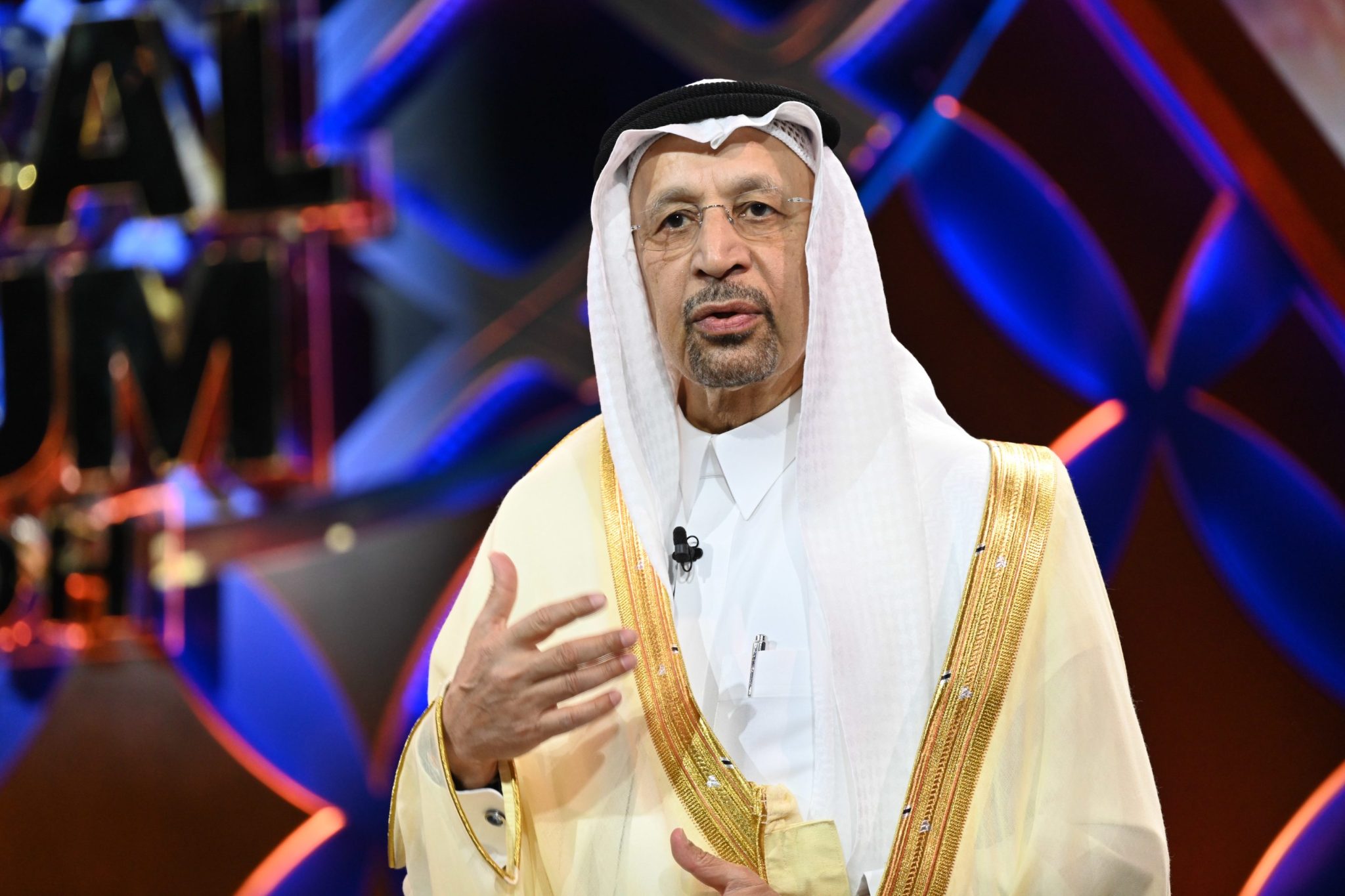
At the Fortune Global Forum in Riyadh, Saudi Arabia’s Minister of Investment, Khalid A. Al-Falih, described the breakthroughs occurring under Vision 2030, the kingdom’s economic transformation plan that is roughly nine years old. Describing 2025 as a “pivotal moment,” the minister argued that “the very foundations of global business are being shaken, in a way, and being rewritten before our own eyes.” He described “tectonic shifts” in geopolitics, global trade, technology, supply chains, energy, even demographics, “all converging to reshape how companies and countries think and operate, how they compete and create value for their stakeholders.”
In conversation with Fortune Editor-in-Chief Alyson Shontell, as well as Alphabet President and Chief Investment Officer Ruth Porat and Barclays Group CEO C.S. Venkatakrishnan, Al-Falih described what he sees as a world where “everyone is concerned” about supply chains still “pushed to the limit,” more than five years after the onset of the pandemic. “Supply chain resilience for both companies and nations and policy makers and governments is dominant,” he said, also citing digital disruption as a key inflection point.
“Underneath this,” Minister Al-Falih told Shontell, there’s a human concern he sees driving leaders’ actions today: “I believe people are looking for partners with whom they can trust who are not short-term, transactional.” The minister framed Saudi Arabia’s Vision 2030 not simply as a national reform agenda, but as a blueprint for global collaboration rooted in mutual resilience — the belief that long-term prosperity depends on shared growth across nations and industries.
“Interdependence remains the defining truth of our time,” Minister Al-Falih said in his opening remarks, urging businesses to embrace cross-border partnerships rather than retreat behind protectionist walls. He described the Kingdom as a “platform for global growth,” emphasizing that resilience in the modern economy requires openness, innovation, and integration with like-minded partners. His message was clear: Saudi Arabia aims to be the world’s most reliable investment destination for companies navigating geopolitical fractures, shifting supply chains, and the green transition.
A decade of transformation
Since its launch in 2016 under Crown Prince Mohammed bin Salman, Vision 2030 has redrawn Saudi Arabia’s economic map. The minister highlighted that non-oil sectors now account for 56% of the national GDP, up from 40% at the program’s inception. Unemployment has dropped below 7% while women’s participation in the labor force has more than doubled to 37% (the latest World Bank data shows 34%), far surpassing early reform targets.
Saudi Arabia’s capital markets, now ranked among the world’s top 10, have become a magnet for international investors, highlighted by the blockbuster IPO of national champion oil firm Saudi Aramco in 2019, now ranked among the top 10 most valuable companies in the world—and the most profitable company ever as of 2023. Multinational companies are establishing regional headquarters in Riyadh at an accelerated pace, Minister Al-Falih noted: 675 as of this year, already exceeding Vision 2030’s target of 500 by 2030. The minister praised these developments as proof that structural change, once theoretical, is now an engine of global competitiveness.
From oil superpower to clean energy leader
Minister Al-Falih also repositioned Saudi Arabia’s traditional role in global energy markets. Long a linchpin of oil and gas supply, the Kingdom now seeks to be just as dominant in renewables — from solar and wind to green hydrogen. “Our ambition is to enable the industries of the future to flourish,” he said, pointing to plans that leverage both the Kingdom’s vast natural resources and rapidly growing renewable portfolio.
He underscored that Saudi Arabia’s competitive edge — low energy costs, geographic centrality, and expanding data infrastructure — makes it ideal for energy-intensive industries, from AI and cloud computing to advanced manufacturing. Riyadh, he announced, is already emerging as a leading global hub for data centers, gaming, and e-sports.
In his closing remarks, Minister Al-Falih invited global companies to “discover for themselves” the ambition and capacity driving Saudi Arabia’s transformation. The nation’s investment strategy, he argued, rests on three pillars — competitiveness, connectivity, and capability — each supported by world-class infrastructure and regulatory modernization.
Saudi Arabia’s evolving identity as both a reformer and a reliable partner resonates far beyond the Gulf. In an era when multinationals are diversifying away from single-market dependencies, Minister Al-Falih’s remarks made clear that Riyadh wants to anchor that shift — offering predictability, efficiency, and partnership in a volatile world.