Business
Google President Ruth Porat: ‘We should be able to cure cancer in our lifetime’ with AI

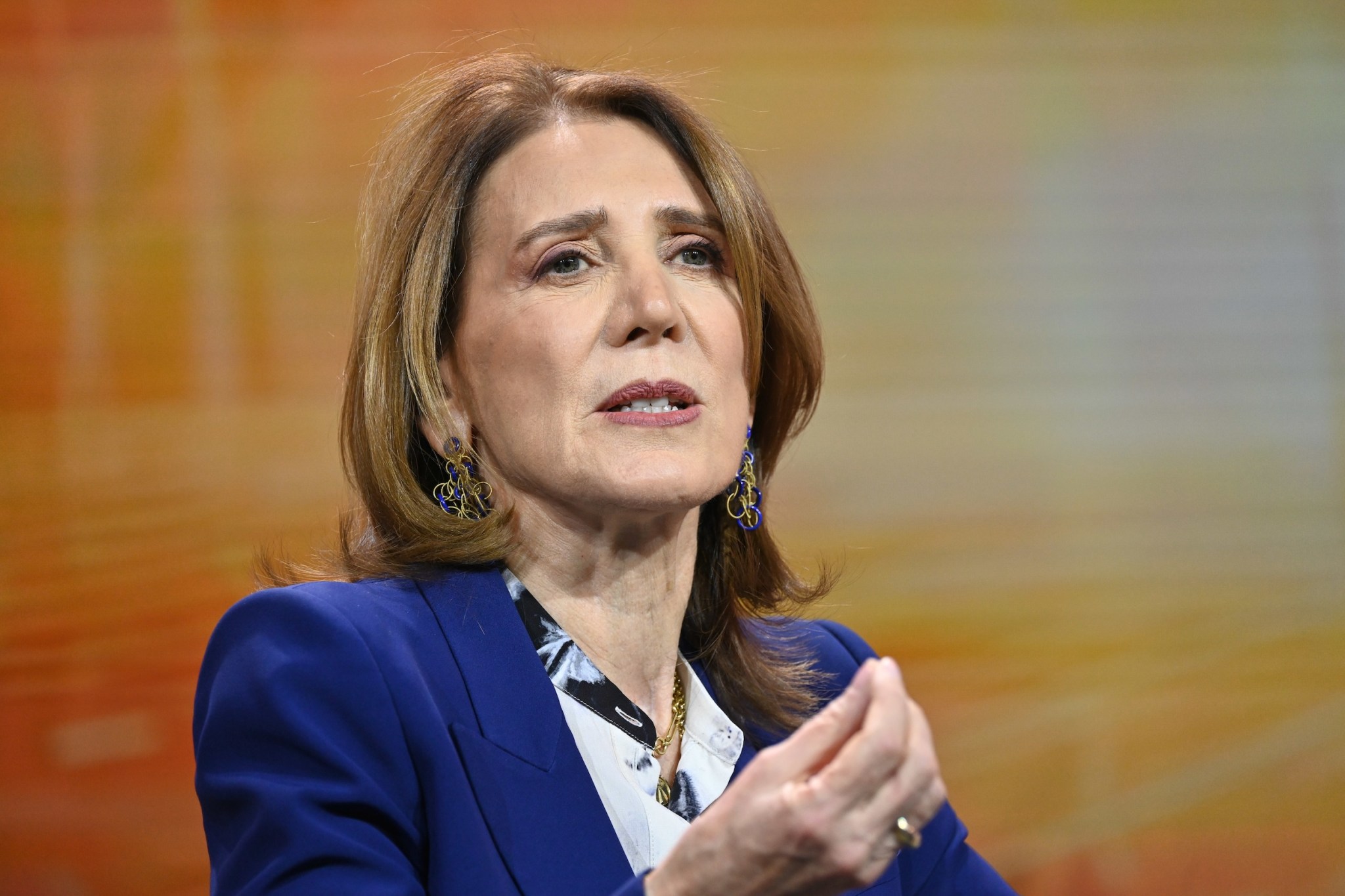
Ruth Porat, Google’s president and chief investment officer, struck an optimistic note about the future of artificial intelligence at the Fortune Global Forum, telling an audience in Riyadh, Saudi Arabia, that “we are all privileged to live at this time in history” because of the opportunity AI presents—a revolution she described as “so much more than a chatbot.”
Speaking alongside Saudi Arabia’s Minister of Investment, Khalid Al-Falih, and Barclays Group CEO C.S. Venkatakrishnan, Porat painted a sweeping vision of AI’s economic, social, and scientific potential, highlighting how many Nobel prize-winners she is fortunate to work alongside at Alphabet. She framed artificial intelligence not merely as a technological advance, but as a transformative force capable of reshaping entire industries, powering economic growth, and driving human progress at an unprecedented pace.
Porat said “people are playing” with AI through chatbots, and that is “great, because that gets you on the journey. But then the question is: what does it mean for my country? What does it mean for my business?” She argued that it’s underappreciated how “we’re already living” through significant breakthroughs in health and science.
Could AI cure cancer?
Porat pointed to breakthroughs in health care as proof of AI’s broader promise. She highlighted DeepMind’s AlphaFold, which maps protein structures in 3D, noting it has been described as “the greatest contribution to drug discovery in our lifetime.” The open-source project has been used by millions of scientists in more than 190 countries, accelerating research into diseases previously considered intractable.
She also said significant work is being done on early diagnosis of diseases. “We all know early diagnosis can be the difference between survival or not or how difficult the course of treatment is.” In cancer, for instance, that comes in seeing metastatic cells early enough to treat the disease before it spreads. This is very much the proverbial “finding the needle in the haystack,” she said, likening its application to cybersecurity and finding malicious code.
“We should be able to cure cancer in our lifetime,” Porat asserted, calling AI a key driver of scientific discovery. She spoke of early cancer detection, AI-powered cybersecurity defenses that identify threats before they occur, and productivity gains that free workers “from the administrative tasks that take us away from what matters most.”
Balancing speed and responsibility
Porat and Venkatakrishnan both discussed how the moment demands urgency from governments and businesses alike. “Every head of state I meet,” Porat explained, “wants to be part of this digital transformation.” She pointed to staggering potential economic benefits, noting that estimates show AI could unlock a $200 billion GDP boost for Saudi Arabia and “trillions globally.” But unlocking that value, she argued, will require serious investment in both energy and infrastructure.
In the United States, for example, she said simply modernizing the electrical grid could create 100 gigawatts of unused capacity, a figure backed up by independent research. She said the power is effectively sitting there, “waiting to be connected.” Another bottleneck is a lack of talent in the form of the blue-collar trades, specifically electricians, Porat noted, echoing other Fortune 500 leaders such as Ford CEO Jim Farley. Google, she added, is investing in training programs for electricians as part of its workforce initiatives, acknowledging that technological progress only matters if societies prepare workers to participate in it. “There are jobs that come in trades as well as the outside across business.”
Venkatakrishnan discussed the “huge amount of investment, hundreds of billions if not trillions happening all over the world.” He impliclitly acknowledged discussions about a potential bubble in AI infrastructure, saying that “in all large capital-investment cycles, there will be some misallocation, some misinvestment. It’s always true. And I think that’s important for people to guard against.” He argued that, whether the demand turns out to be 1x or 5x of a certain projection, investing in infrastructure—and by extension the tradesmen who build and run it—is a wise choice. Venkatakrishnan added that major capital cycles also require partners you can trust and “who are there for the long term and who will help you through the teething troubles.”
Her message echoed themes of inclusion and global partnership that ran throughout the panel, particularly as Saudi Arabia positions itself as a regional hub for digital infrastructure and AI investment. Al-Falih emphasized his country’s long-term strategy of building supply chain resilience and energy capacity to power the digital economy of the future.

Porat closed by urging leaders to really dig in and reimagine what’s possible in their own organizations. The transformative potential of this technology, she said, lies not only in boosting productivity but in elevating human creativity and purpose.