Business
The broken narrative of higher education bears little resemblance to students’ real lives

Public confidence in higher education is showing signs of recovery. According to a recent Gallup–Lumina survey, 42% of Americans now say they have a “great deal” or “quite a lot” of confidence in colleges and universities, up from 36% just a year earlier.
But you wouldn’t know that from reading the headlines. National news remains fixated on controversies at elite campuses, skewing the public’s perception of the institutions that serve the majority of students.
Community colleges alone enroll roughly 44% of all undergraduates, yet they are rarely featured in mainstream narratives. Low-cost state colleges and universities serve many more. This mismatch between perception and reality has real consequences, fueling the notion that higher education as a whole is elitist and out of touch, hiding the work of the colleges that educate millions of working- and middle-class families. It’s time to reframe the narrative of higher education to spotlight a wider array of institutions and students and build a more accurate and productive national conversation.
Institutions already see the need to better communicate their value to reflect the needs of today’s students. But seeing and serving today’s students isn’t just a nicety. It’s a matter of survival.
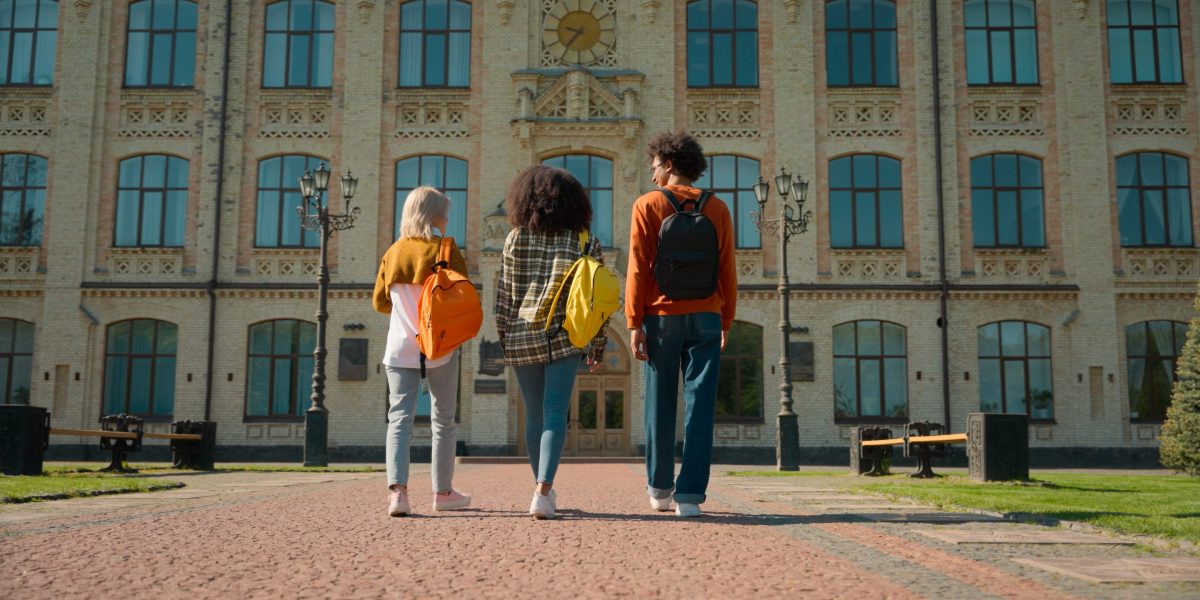
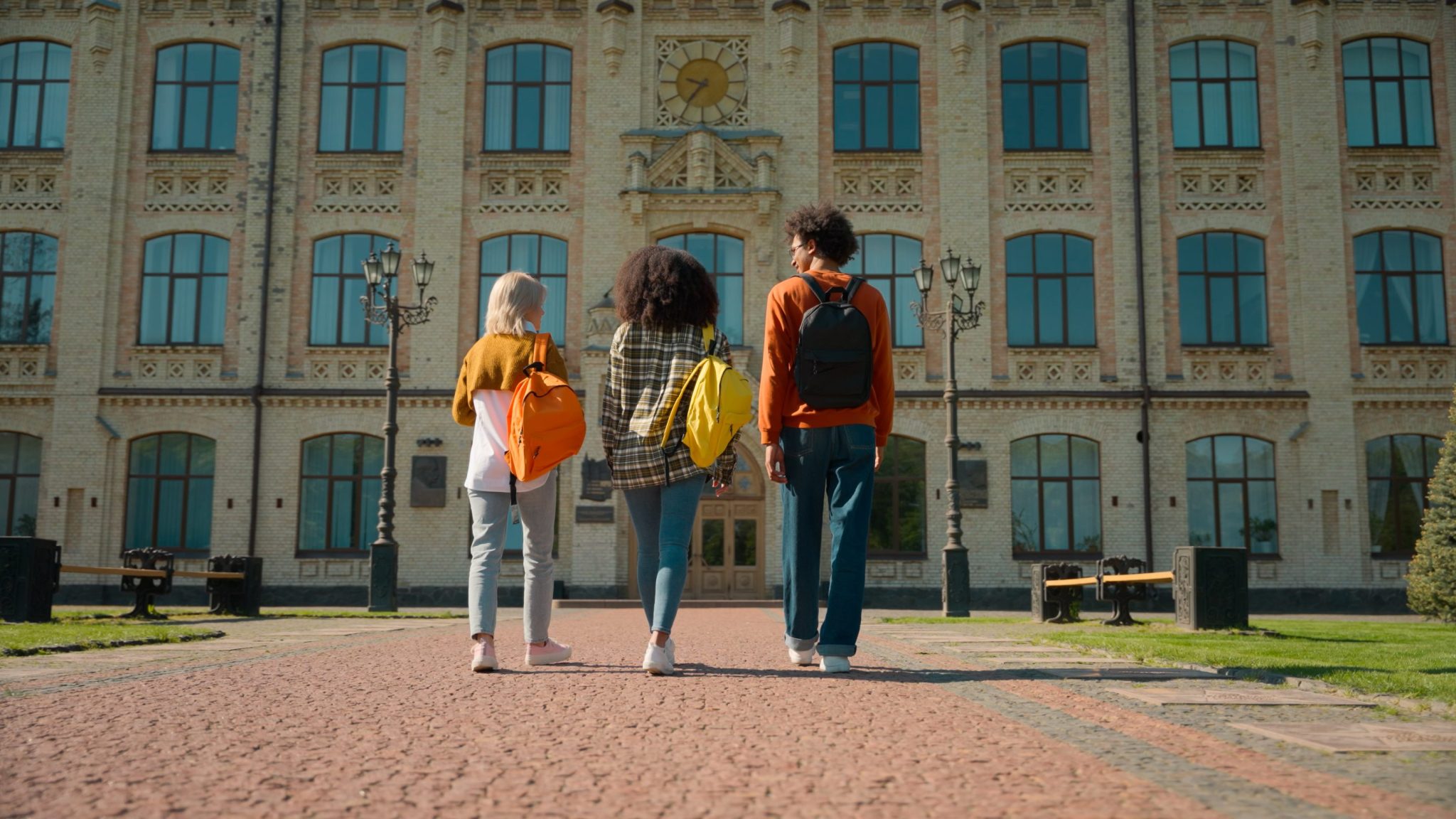
Colleges are staring down a looming demographic cliff, with the number of high school graduates projected to decline substantially. But this shift is not a distant future. It’s the present. Today’s learners are older, working, parenting, or returning to school later in life. First-generation students make up a growing share, often balancing multiple obligations while pursuing a credential. And yet the public’s image of college remains stuck in the past, with full-time students living on leafy campuses, unencumbered by outside responsibilities filling the frame.
For too long, our policy debates and headlines have fallen short—and still do. Controversies at selective institutions attract headlines and political energy, but they have little to do with the concerns most students bring to college. For the vast majority of learners, the most pressing questions are whether tuition is affordable, childcare is available, credits transfer without friction, and programs lead to real employment opportunities. These issues receive far less attention.
While higher education policy has made a few changes to reflect the complex experiences of today’s students, they don’t consider the key challenges in supporting their economic mobility. Efforts like the expansion of Workforce Pell Grants, the federal “5250” tax benefit for employer-sponsored tuition assistance, and other changes represent important progress in serving nontraditional and working learners, and the expansion of federal funding is laudable. However, funding alone isn’t comprehensive enough. Federal and state policymakers need to buttress these investments with stronger protections that ensure access to workforce training translates into real outcomes, not the false promise of low-quality training options with untrusted credentials. It is past time for a federal data system that captures the realities of today’s students—one that reflects the full diversity of who they are and how they learn.
Congress members’ own backgrounds, largely shaped by selective public and private universities, only deepen the disconnect. Pop culture can even play a powerful role in shaping the nation’s perception of higher education–Hollywood still leaning heavily on images of pristine lawns, students in caps and gowns, and idealized lecture halls. Rarely do they depict the moments that define today’s higher education: a working learner meeting with an advisor, someone studying after a night shift, a parent bringing a child onto campus, or a student in a lab training for a trade.
To rectify this distorted public view, Complete College America recently launched the Complete College Photo Library, a free collection of nearly 1,000 images designed to reflect the realities. It includes scenes from community colleges, technical schools, HBCUs, and HSIs, showing students in workforce training and balancing life as they pursue their education. This kind of effort shifts the visual narrative to a more balanced, realistic view of higher education. It can help the public make the connection between what goes on in these institutions and the outcomes they create.
That narrative is also being reshaped by new—and even more expansive—models of the collegiate experience. Earlier this year, I was interviewed for a “College Guide” exploring the multiplicity of pathways students now take through postsecondary learning. Among them is Campus, a two-year online community college that is flipping the script on traditional models. It also includes Marcy Lab School, which prepares young people from underrepresented backgrounds for high-paying careers in technology without requiring a four-year degree.

These innovations remind us that the true value of higher education is not measured by Harvard’s endowment, the wealth of Silicon Valley, or the publishing deals of celebrated professors. It is measured in the millions of students striving for opportunity—most of them raising children, working jobs, serving in uniform, or making rent and mortgage payments with other bills competing for their attention.
It is found in the automotive and welding programs that provide essential skills for stable careers. It takes shape in the dual enrollment programs that allow high school students to earn an associate degree before graduation. And it lives in prison education programs—long shut out of federal support—that give people dignity, skills, and a chance to start again. While the residential liberal arts experience is indeed one version of college, it is not the only version.
Policymakers and the media must expand the frame to feature real students, and give weight to the myriad of experiences that define higher education for most Americans. Not ideological crusades. Not gated enclaves for the few. But a big, beautiful, and sometimes messy public square that belongs to us all.
That’s not just good storytelling. It’s reality. And it’s essential for higher education’s future.
The opinions expressed in Fortune.com commentary pieces are solely the views of their authors and do not necessarily reflect the opinions and beliefs of Fortune.