Business
Top housing exec rips Americans who ‘want things that we don’t want to pay for’ and neglect the blue-collar trades at our peril


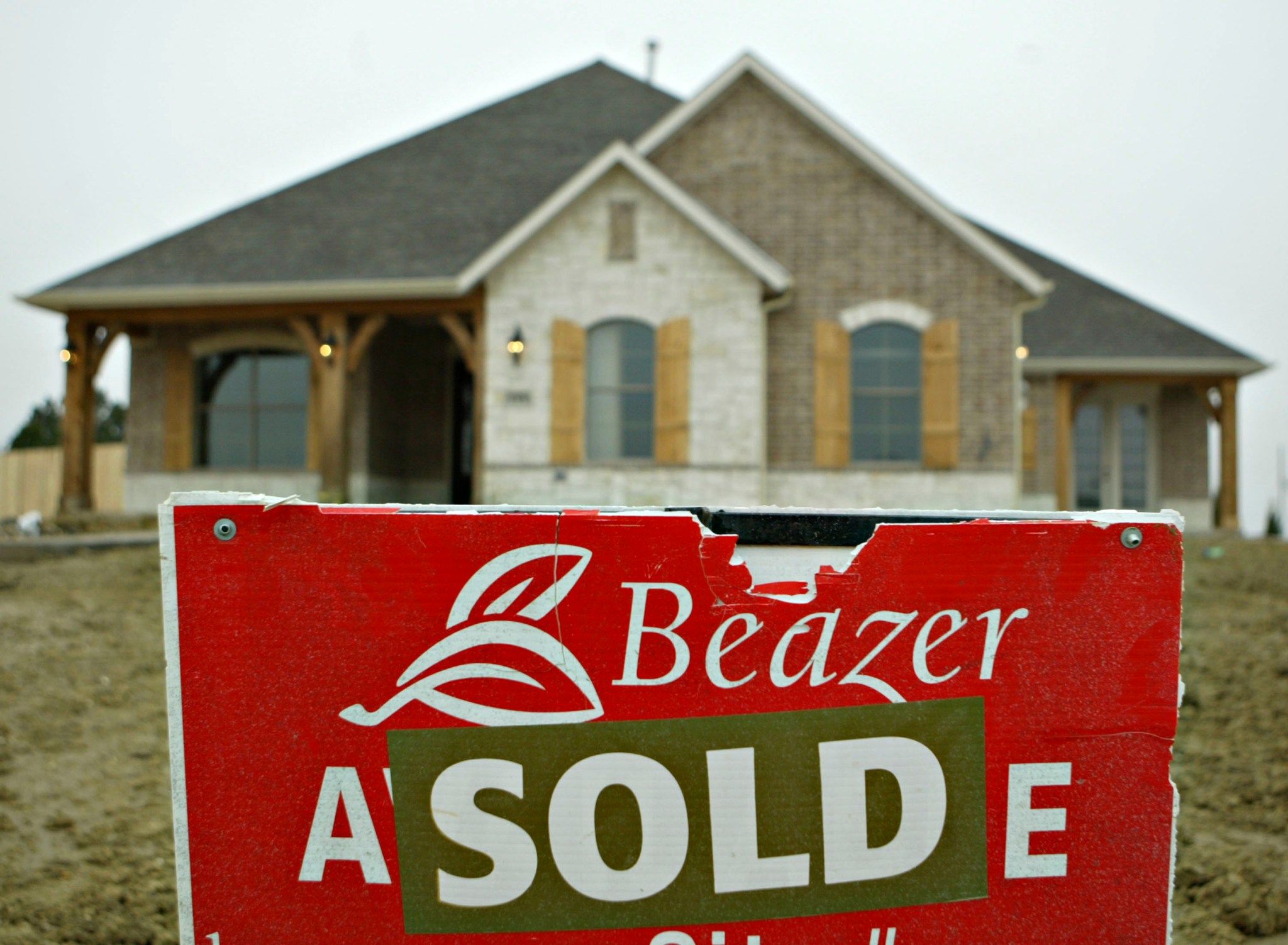
A top U.S. housing executive has delivered a stark warning about the economy, sharply criticizing consumer attitudes and government policies that he says threaten affordability and homebuilding growth. Drawing a direct parallel between America’s fiscal habits and the problems facing homebuyers, Allan Merrill, CEO of $650 million homebuilder Beazer Homes, declared, “We want things that we don’t want to pay for” as a country.
Speaking on a panel at ResiDay, a residential real estate conference hosted by ResiClub, Merrill talked to the outlet’s editor, Lance Lambert, about what he sees as a fundamental cowardice in American economic behavior. At the same time, he warned that America’s neglect of blue-collar trades poses a significant risk to the economy and the homebuilding sector. With immigration-related labor supply dwindling and front-end trades anxious for work due to declining new home starts, he pressed for more industry-led training and recruitment initiatives.
Mounting affordability crisis
In a candid interview, Merrill described 2025’s housing market as disappointing and sluggish, despite strong jobs numbers and persistent consumer demand. Inventory built up as builders anticipated a strong spring, only to face tepid sales, particularly in major markets like Texas and Florida. Despite innovation in cost-cutting approaches—such as tackling mortgage rates, utility costs, and insurance premiums—affordability remains severely constrained for most buyers. Merrill notes his firm’s efforts to save buyers $300 to $700 a month by optimizing costs, saying he thinks the market has to “grind back … I think it’s a multi-year period of sort of trying to get back to a more normalized affordability environment.”
Merrill’s most passionate remarks centered on government-imposed fees and permitting costs, especially in states like California, where pre-construction expenses can reach $140,000 per home. He called this a dangerous gamble, likening it to the nation’s ballooning deficits: “We want things that we don’t want to pay for right now, we’re going to let somebody else in the future pay for them. When I look at the fees that builders pay for new construction, it’s very much the same thing.” Merrill accused local utility and government officials of lacking the courage to ask current users to bear infrastructure costs, instead shifting the burden onto new homebuyers—ultimately fueling the affordability crisis for future generations.
Acknowledging that he was going to sound “a little curmudgeonly” and that he didn’t want to “malign any particular municipalities,” he raised the example of pulling a permit on a recent newbuild, single-family detached home in the Sacramento area. He claimed he had $138,000 in permits and fees before he could even start construction, “and this is a municipality that complains about affordability in their neighborhood.” Likening this attitude to the national fiscal situation, he said, “I think we’ve been irresponsible.”
“We don’t really have the courage at the utility district level,” Merrill said by way of an example, “to tell sewer rate payers and water rate payers and trash rate payers and park enjoyers: ‘Here’s what that infrastructure costs,’ because they vote.” Instead, he said, the approach is to increase fees on new construction, affecting companies like Merrill’s own that are trying to build new homes. The answer for that is clear, he said: “Lots don’t vote.”
The art history major vs. the HVAC technician
In wide-ranging remarks, Merrill also discussed trends in the American economy that are hurting housing affordability, which in turn hurts his business and the average American homebuyer, who just hit 40 years old for the first time in history. Beazer is facing “real challenges” sourcing the talent to build more homes. Merrill said he thinks of the proverbial “young person with an art history degree” who has $150,000 of debt and a $60,000 job when there are better opportunities in the blue-collar trades. “I think about that person who’s got an HVAC business or a plumbing business or a framing business, is making $150,000 and has no debt and is in Hawaii on vacation. I think the trades are a much maligned career path.” Merrill added, “by the way, my kids haven’t followed this advice” to go into those lines of work.
Merrill’s remarks come amid a national reckoning with, on the one hand, a severe shortage of skilled blue-collar labor, and on the other, ballooning costs and a suffering reputation for higher education. In similar remarks in early October, Ford CEO Jim Farley told a vulnerable story of how his son was openly wondering whether he needed to go to college. Having worked as a mechanic over the summer, Farley’s son told him, “Dad, I really like this work. I don’t know why I need to go to college.”
Merrill’s remarks serve as both a critique and a call to action—for policymakers to reconsider strategies that shift the burdens of progress onto future buyers, and for young Americans to reevaluate the value of skilled trades. Without real reform, he warned, America’s housing crisis will deepen, squeezing both builders and buyers in a landscape where “wanting things” without paying the true cost has become the norm—and where the peril of neglecting the blue-collar backbone of the nation may soon come home to roost.