News
China’s strategy in AI race with US — big chip clusters, cheap energy

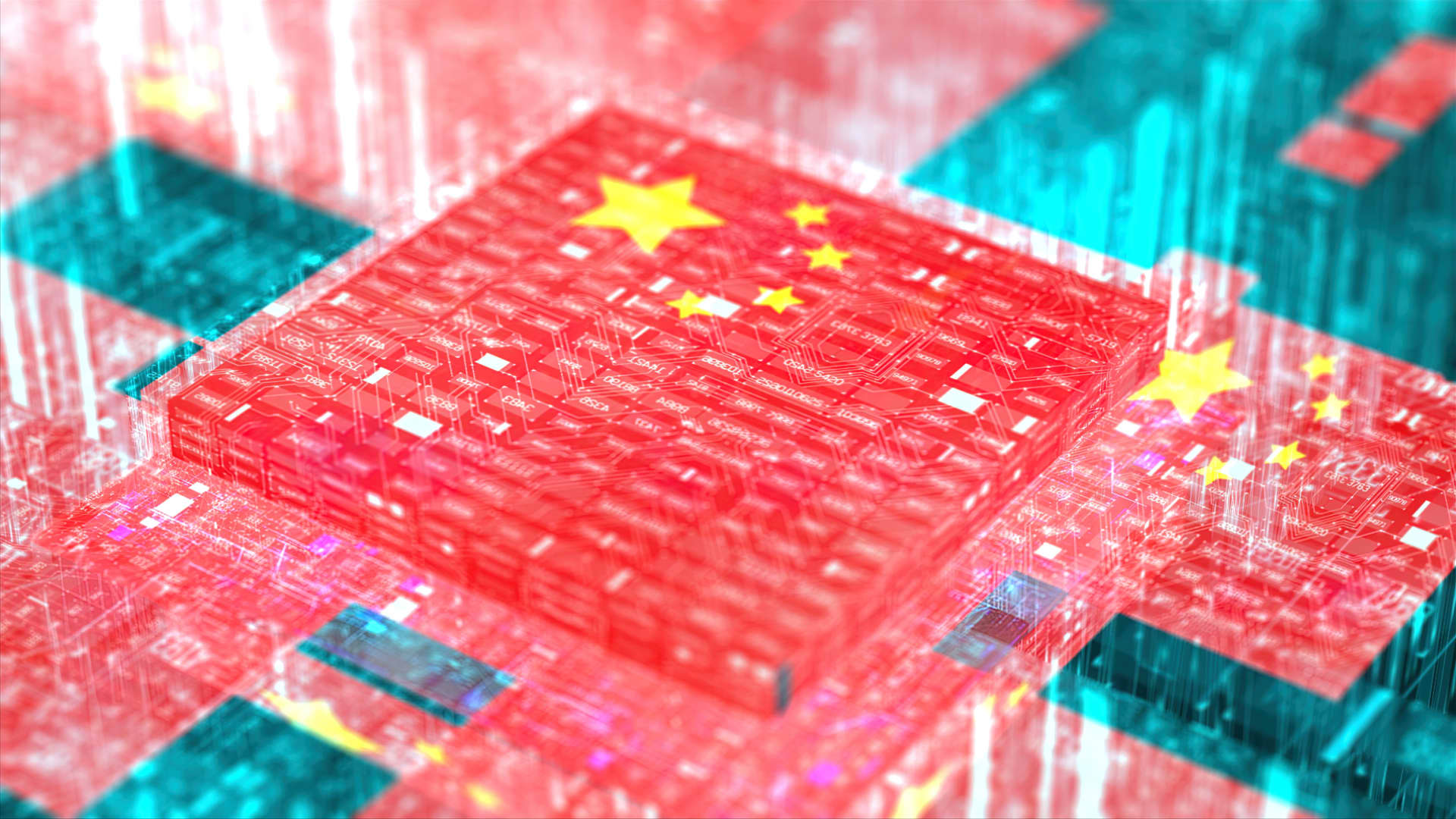
China is focusing on large language models in the artificial intelligence space.
Blackdovfx | Istock | Getty Images
It’s well known that Chinese semiconductors designed for artificial intelligence cannot compete with the American firm Nvidia. Yet, China has managed to continue developing highly advanced AI models, with many being run on homegrown chips.
China’s secret? A plethora of cheap energy and giant chip clusters from the China’s tech champion Huawei that are underpinning AI advances in the country’s race against the U.S.
“China is striving for self-sufficiency across the AI stack, as it sees AI as a strategic technology for national and economic security,” Wendy Chang, senior analyst at the Mercator Institute for China Studies (MERICS), told CNBC.
With the world’s second-largest economy being cut off from certain tech due to U.S. restrictions, and Beijing opting to shun Nvidia chips, questions have swirled over its ability to compete in the field of AI.
Despite these geopolitical challenges domestic technology companies from Alibaba to DeepSeek have managed to develop and release high performing AI models, with many being trained on homegrown chips.
Huawei vs Nvidia
Nvidia’s graphics processing units (GPUs) are seen as the gold standard when it comes to the semiconductors required to train and run AI models and applications. But U.S. export controls have stopped Nvidia from shipping its most advanced chips to China.

Under a deal with the White House this year, Nvidia was given the green light to sell its H20 product, a downgraded chip designed for China, into the market. However, Beijing reportedly encouraged Chinese firms to eschew Nvidia products and instead use chips designed for domestic companies.
In comes Huawei, one of China’s most celebrated technology giants, which develops the Ascend series of chips. But on a chip-per-chip basis, Huawei does not compete with Nvidia. Instead, Huawei’s advantage comes from its ability to link and connect many of these chips into high-performance “clusters” that can compete with Nvidia.

One of those products is the Huawei CloudMatrix 384, which connects 384 of its Ascend 910C chips to deliver performance to rival Nvidia’s GB200 NVL72, one of its most advanced systems. Nvidia’s system uses 72 of its GPUs while Huawei’s product uses five times as many of its own Ascend chips.
“This strategy relies on high-speed, potentially optical interconnects to move data quickly across large clusters – a setup that doesn’t require top-end chips and therefore suits China’s current strengths,” Brady Wang, associate director at Counterpoint Research, told CNBC.
China’s energy advantage
The downside to Huawei’s system is that using more chips also means significantly higher power consumption. And that’s where China’s energy advantage over the U.S. kicks in.
“Solutions like the CloudMatrix are less power efficient than Nvidia systems, but here China benefits from its abundance of cheap energy,” MERICS’ Chang said.
“China has made massive investments in green energy including solar, wind and more. It has also been rapidly expanding its nuclear energy infrastructure. It can therefore count on cheap energy when building out AI infrastructure.”
A general view of the new AI computing system, the CloudMatrix 384 system, debuts at the Huawei Booth at the Shanghai New Expo Center during the opening day of the World Artificial Intelligence Conference (WAIC) 2025 in Shanghai, China, on July 26, 2025.
Ying Tang | Nurphoto | Getty Images
Beijing, as well as local governments, have looked to support this effort. A number of cities across China, from Shanghai to the tech hub of Shenzhen, have offered subsidies or “vouchers” to reduce the cost for companies looking to rent computing power.
The Financial Times reported this week that some local governments in China are offering subsidies that cut the electricity bills of data centers that are using domestic chips.
“Less advanced-process accelerators consume more power, but China is offsetting this with diverse energy sources — nuclear and renewable options like solar — along with low rents and financing, allowing it to fund and run large-scale clusters despite inefficiencies at the chip level,” Counterpoint Research’s Wang said.
China vs U.S.: Will the gap widen?

The question is, as semiconductors for AI advance, will Huawei and SMIC be able to keep up with Nvidia and TSMC given the Chinese firms’ restrictions on access to critical technologies?
“One of the key constraints in this strategy is China’s capacity to produce enough chips domestically to make up and keep up with the gap in capability as NVIDIA and others continue to improve performance as well,” Hanna Dohmen, senior research analyst at Georgetown’s Center for Security and Emerging Technologies (CSET), told CNBC.
“China is working hard to build up its semiconductor fabrication capabilities and capacity; however, it still lags significantly due to constraints imposed by U.S. and allied export controls on semiconductor manufacturing equipment.”