Business
Commentary: U.S., South Korea need to salvage tariff agreement—for the sake of the alliance


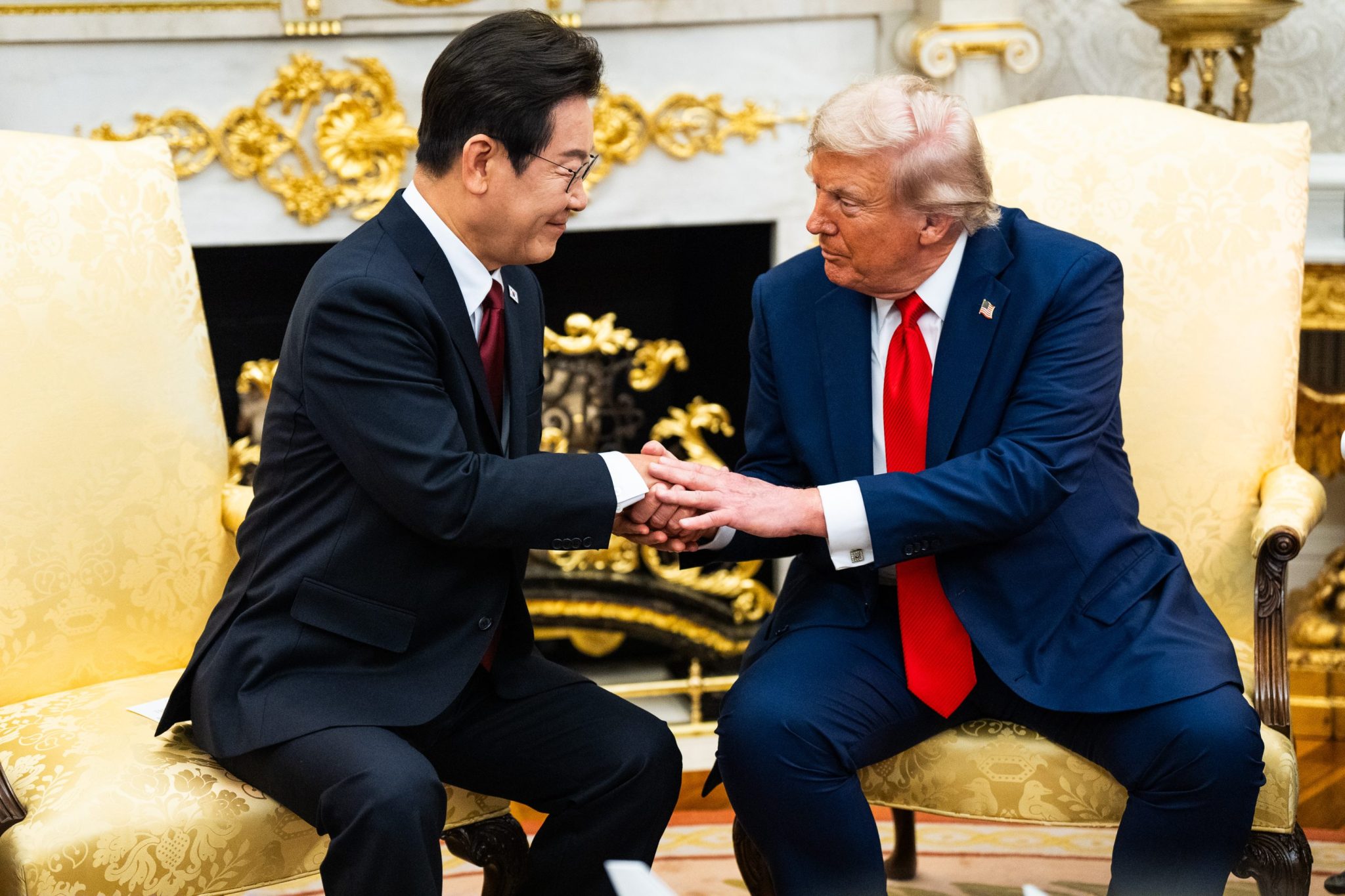
South Korean president Lee Jae Myung joked that he avoided a “Zelenskyy moment” during his first meeting with U.S. President Donald Trump last August. There was much to celebrate at the long-delayed summit: An agreement that reduced U.S. tariffs on its sixth-largest trading partner from 25% to 15%, and alignment on the two allies’ security policies towards North Korea.
But—as is now common under the Trump administration—those good feelings quickly soured. A brewing crisis now threatens the 72-year-old alliance and South Korea’s hosting of the APEC Summit at the end of this month.
The first sign of trouble was the lack of a joint statement at the Lee-Trump summit on August 25. That worried me, given my own experience managing U.S. alliances in Asia: These statements, often produced after the first meetings between presidents, are critical in charting out the path for both governments to follow in the coming years.
Second, disagreement over the terms of a $350 billion investment commitment made by Seoul as part of its tariff deal continues to plague Korea-U.S. relations. The Korean government agreed to capitalize a fund, plus $100 billion in U.S. energy purchases, that Trump could invest in U.S. business and manufacturing as he chooses.
But now Lee argues that the $350 billion investment agreement is too large for Korean coffers. Seoul claims the amount equals 84% of its foreign exchange reserves. Thus, fulfilling its commitment would bankrupt the Korean economy—unless Seoul gets loan guarantees and a currency swap agreement with the U.S.
Yet for Trump, a deal is a deal. He wants the full $350 billion—and he wants it in cash equity, not loans. He wants complete control over how to invest the money into U.S.-owned companies, and both sides disagree on how to share the returns from the fund’s investments.
And to make matters worse: U.S. Commerce Secretary Howard Lutnick reportedly wants the Koreans to commit even more funds, approaching the $550 billion promised by Japan.
Third, ICE’s raid on the $4.3 billion Hyundai-LG EV battery plant in Georgia and the deportation of over 300 workers has outraged South Korea. The U.S. has a right to enforce its immigration laws, yet Koreans saw the raid as ill-timed and inappropriate. Seoul has now paused the massive investments that Trump hopes will bring manufacturing back to the U.S.
The alliance now looks like a train wreck in slow motion.
Trump, who once called South Korea a “money machine,” will likely scoff at Seoul’s pleas of insolvency. He’s holding off on reducing tariffs on South Korea as leverage to get what he wants on his investment demands.

It’s not clear how much longer the South Korean economy can manage the damage wrought by Trump’s tariffs. Already, the country’s No. 1 export to the U.S., autos, is down by 15% year-on-year due to new import duties. Overall, South Korea’s exports to the U.S. are down 4.1%.
Koreans, angered by images of their countrymen shackled by ICE, may choose to play hardball and continue withholding their investments. That may push Trump to double down, whether by hiking tariffs on autos and auto parts above the current 25%, or trying to use U.S. troops on the peninsula—a long-standing Trump complaint—as a bargaining chip.
Both governments must prevent these disagreements from spiraling out of control. Korean firms invest in everything from chips to ships, with U.S. investments since 2017 totaling over $500 billion, making South Korea the U.S.’s top greenfield investor.
Yet U.S. visa policies haven’t caught up to this surge in business travel spurred from this abundant investment. Trump’s administration was right to send an emissary after ICE’s Hyundai raid to express regret and negotiate a new business visa process for South Koreans, despite criticism from the more anti-immigrant MAGA base.
South Korea’s priority is to get tariff rates down to 15% as soon as possible. Japan and the European Union now have tariffs at that level, putting South Korea at a competitive disadvantage. If Seoul walks away from its $350 billion commitment, Trump might slap even more tariffs on the country.
If the commitment is too large, the two governments can look for workarounds, such as lengthening the period of performance, contributing to the investment fund project by project, or credit recent Korean investments. Other refinements could include a dispute resolution mechanism and a joint task force to assess project viability.
But it’s in the interests of both Washington and Seoul to view these adjustments as fine-tuning an agreement both sides can tolerate, rather than as part of make-or-break negotiations where each side is ready to walk away.
The opinions expressed in Fortune.com commentary pieces are solely the views of their authors and do not necessarily reflect the opinions and beliefs of Fortune.