Business
Weather forecasting is getting harder. DeepMind’s AI just passed a real test

When NASA and its Soviet rivals launched the first meteorological satellites into space in the 1960s, weather forecasts on Earth changed forever. With a constellation of eyes in the sky, forecasters could suddenly monitor conditions over oceans and remote landmasses, filling in major gaps in their models and providing an early warning system about potential storms forming far away.
Today, as climate change makes weather more difficult to predict, and as extreme weather events increase in frequency and ferocity, meteorologists are hoping another big technological breakthrough will give them an edge.
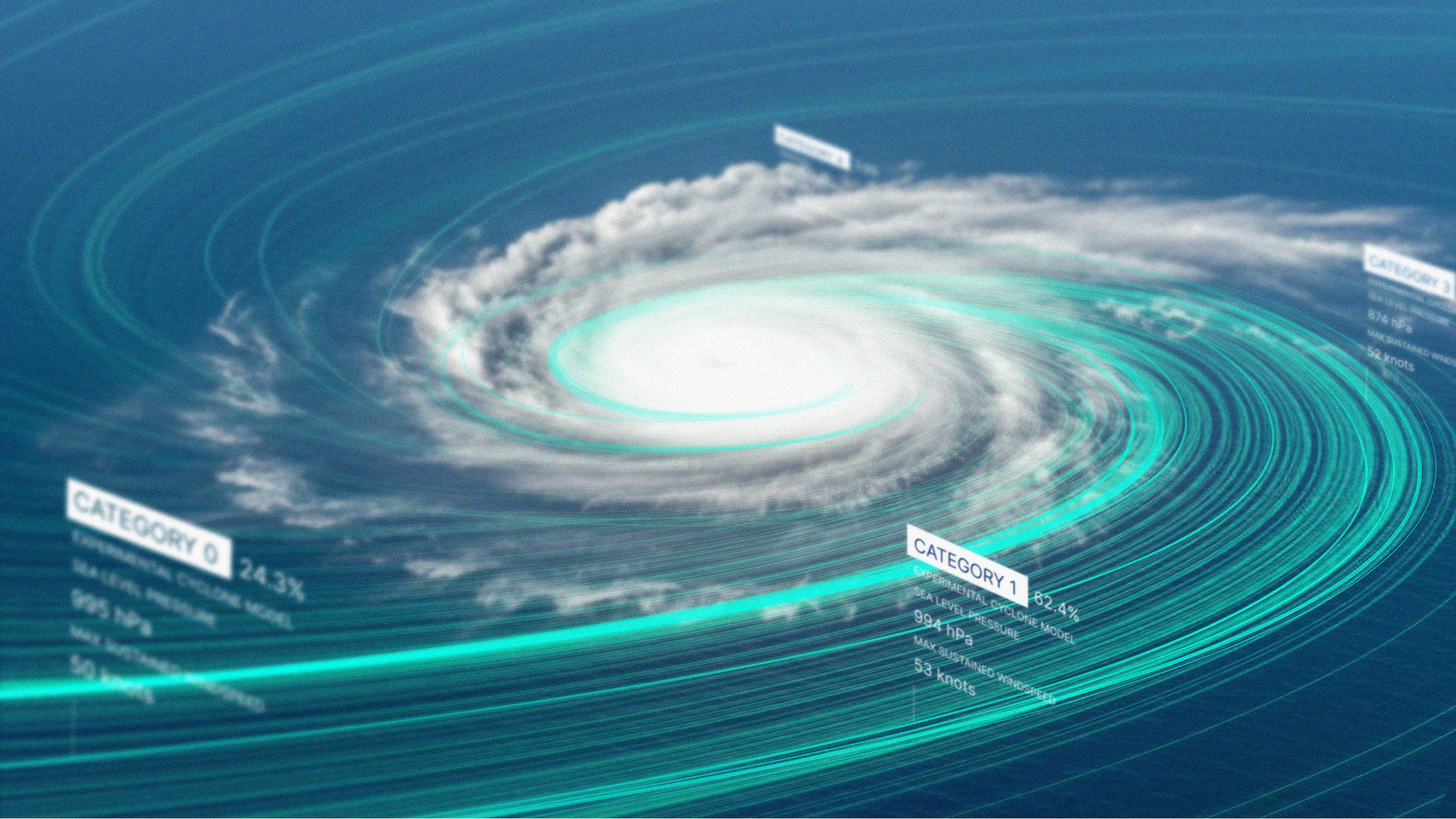
Artificial intelligence is bringing new power and capabilities to forecasting models, enabling scientists to detect extreme weather events with greater speed and accuracy. In August, when Google DeepMind’s hurricane-forecasting tech was tested on Hurricane Erin, it not only beat out the “official” forecast from the U.S. National Hurricane Center (NHC) for the first 72 hours but also bested a number of physics-based models.
Other tech giants like Nvidia and Huawei, as well as government agencies like the U.S. National Oceanic and Atmospheric Administration (NOAA), are already testing AI-driven weather models. AI is particularly good at two tasks vital to forecasting: handling big datasets and recognizing patterns within them. Unlike conventional models that primarily rely on current atmospheric readings, Google’s AI system analyzes historical hurricane data to uncover patterns that might elude human forecasters.
There are still limitations, of course. In its first real-time test, for Hurricane Erin, Google’s forecasting model performed best at periods of 72 hours or less. But for forecasters, the three- to five-day forecast window is the most crucial, as it’s when evacuation orders and hurricane preparations are set in motion.
Even the most bullish technologists acknowledge that there are no panaceas and that models come with tradeoffs and limits. For example, AI models have historically shown a tendency to “smooth out” data, meaning that subtle but important details can be blurred in an effort to present cleaner versions of the data.
“It’s going to democratize weather modeling in a way we’ve never seen before.”John Ten Hoeve, NOAA Weather Program Office
But the possibilities are certainly there—and the marriage of AI and meteorology is getting serious attention for its potential to improve public safety as well as business planning and supply-chain logistics.
Smarter hurricane predictions
Tom Andersson became interested in weather models after hearing from experts that, despite rapid progress in AI forecasting, the models weren’t yet reliable enough to predict storm intensity in real-world settings.
“Extreme weather can turn lives upside down in a matter of hours or minutes if it arrives without warning,” said Andersson, a Google DeepMind research engineer involved in the experimental tropical cyclone model that launched in June. (“Cyclone” is the umbrella term for powerful, rotating tropical storms; “hurricane” refers primarily to those in the Atlantic.) “We were driven to build technology that could empower weather agencies to better inform the public about the risk.”
The model’s ability to predict both a storm’s track (where it’s heading and where it might make landfall) and intensity (how strong and dangerous it may become) has been seen as a breakthrough in the meteorology community, and it’s actively being evaluated by the NHC and other international experts.

“Previously, you couldn’t have one model that is both very good at predicting where a cyclone will go and how strong it will be at the same time,” Andersson said. “This is possibly the first model to be able to do both simultaneously.”
Hurricanes are very time-sensitive events. If authorities want to send emergency resources, or tell people to evacuate, they need to know as much as possible about their track.
“We can give the same quality of warnings about one day and a half earlier than the previous physicsbased models,” said Ferran Alet, a research scientist at Google DeepMind who led the development of the cyclone model. “We are hoping to enhance the human forecasters.”
While traditional methods are based on physical equations, AI models learn patterns from large datasets, which can help quantify uncertainty, assist in identifying extreme events, and allow models to improve over time.
Of course, AI models are ultimately only as good as the data they learn from, and DeepMind has benefited from both a global historical weather dataset as well as a more specific cyclone dataset going back more than four decades.
“People like to complain about weather prediction not getting the rainfall correct…but it’s actually remarkable that we can now predict where a hurricane off the Atlantic Ocean is going to go in three or five days’ time,” Andersson said. “That wasn’t the case several decades ago, and it’s due to the quite radical and revolutionary technical openness of the whole meteorology community that we’ve got here.”
While this is all exciting in theory, it’s early days for the DeepMind model, which is largely untested when it comes to accurately forecasting real-time hurricanes. Machine learning models are unlikely to completely replace physics-based models as they each have their own benefits and limitations. Forecasters are thinking of AI as an extremely powerful new tool in the toolbox, rather than an automation of their work.
Weathering business risk
With more accurate, timely, and localized weather predictions, companies can better anticipate disruptions, allocate necessary resources, and mitigate risks to supply chains.
There’s also the potential for AI to connect weather forecasts more directly to real-world data to create hyperspecialized predictions. For example, a trucking company could use weather data alongside its own operations to plan more efficient routes.
“You’d be able to take information about road conditions and information from sensors, plus inventory information, plus weather information to optimize their value chain between weather and human information,” explained John Ten Hoeve, the deputy director of NOAA’s Weather Program Office.
What’s more, AI has the potential to reduce the overall cost of forecasting. AI models are costly to train, but once developed, they can be run quickly and cheaply—unlike traditional models, which get more expensive as forecasters try to run multiple simulations.
“Once these models are trained, they’re pretty accessible. You can run them on your laptop in a few minutes,” Ten Hoeve said. “It’s going to democratize weather modeling in a way we’ve never seen before.”
This article appears in the October/November 2025 issue of Fortune with the headline “The AI of the hurricane.”