Business
Cattle faces a growing threat from a protected vulture spreading north amid climate change


Allan Bryant scans the sky as he watches over a minutes-old calf huddled under a tree line with its mother. After a few failed tries, the calf stands on wobbly legs for the first time, looking to nurse.
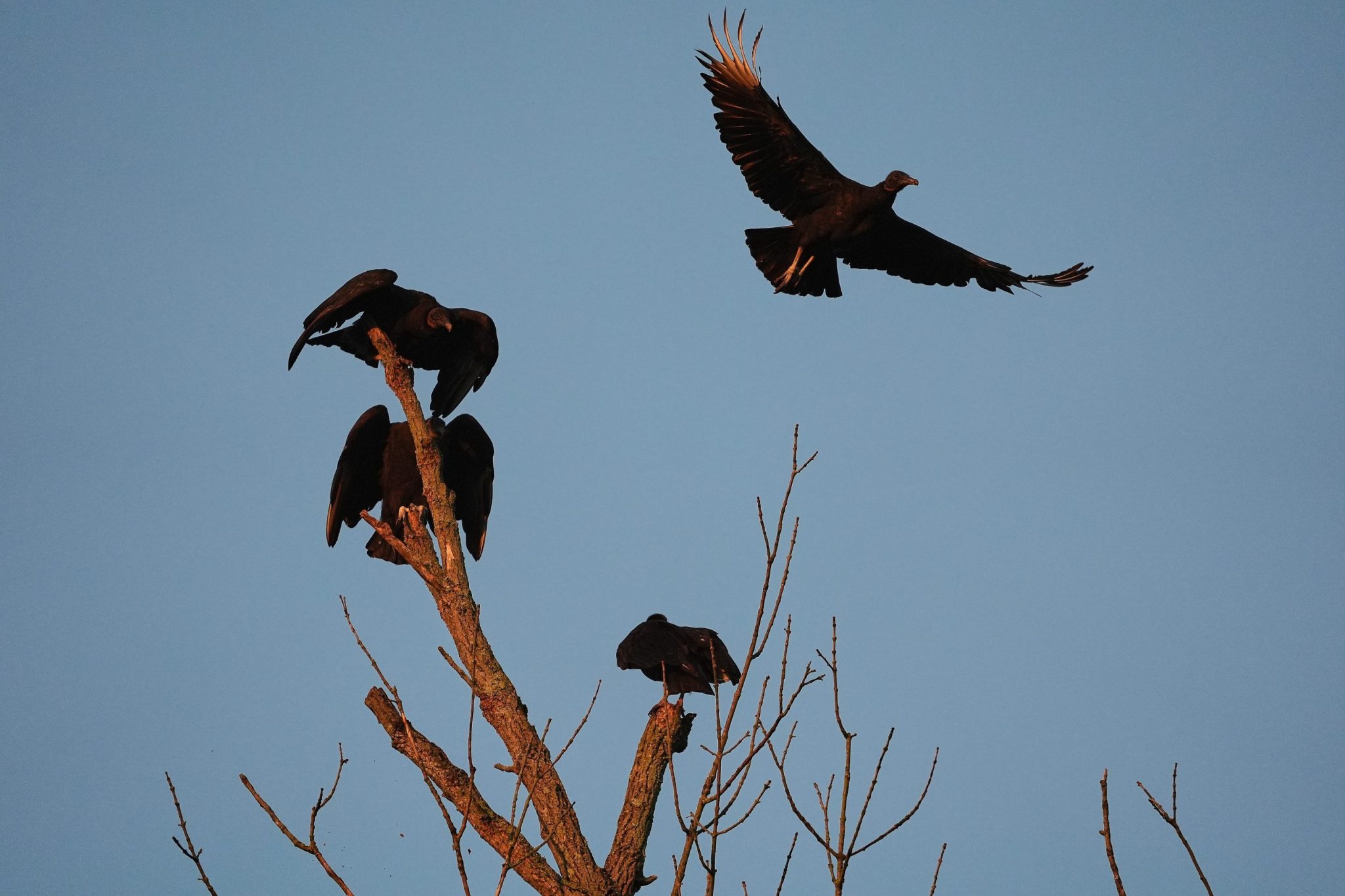
Above, a pair of birds circle in the distance. Bryant, hoping they’re not black vultures, is relieved to see they’re only turkey vultures — red-headed and not aggressive.
“Honestly, the black vulture is one of the ugliest things I’ve ever seen,” he said. “They’re easy to hate.”
Black vultures, scavengers that sometimes attack and kill sick or newborn animals, didn’t used to be a problem here. But now Bryant frequently sees the birds following a birth. He hasn’t lost a calf in several years, but they’ve killed his animals before. So now he takes measures to stop them.
In some of his fields, he erects a scarecrow of sorts — a dead black vulture — aimed at scaring off the birds. It’s a requirement of his depredation permit through the Kentucky Farm Bureau, which allows him to shoot a few birds a year. The dead bird keeps the live birds away for about a week, but they eventually come back, he said.
It’s a problem that may grow worse for cattle farmers as the scavenging birds’ range expands northward, in part due to climate change. Lobbying groups have been pushing for legislation that would allow landowners to kill more of these birds, which are protected but not endangered. But experts say more research is needed to better understand how the birds impact livestock and how their removal could affect ecosystems.
Warmer winters and changing habitats expanding birds’ range
Black vultures used to mainly live in the southeastern U.S. and farther south in Latin and South America, but over the past century they’ve started to rapidly stretch northward and also west into the desert Southwest, said Andrew Farnsworth, a visiting scientist at Cornell Lab of Ornithology who studies bird migration.
Warmer winters on average, fueled by climate change, are making it easier for the birds to stay in places that used to be too cold for them. What’s more, the human footprint in suburban and rural areas is enriching their habitat: development means cars, and cars mean roadkill. Cattle farms can also offer a buffet of vulnerable animals for vultures that learn the seasonal calving schedule.
“If there’s one thing we’ve learned from a lot of different studies of birds, it’s that they are very good at taking advantage of food resources and remembering where those things are,” Farnsworth said.
Although black vultures are protected by the Migratory Bird Treaty Act, they aren’t really a migratory species, he said. Instead, they breed, and some disperse to new areas and settle there.

How farmers have been dealing with it
After losing a calf to a black vulture a decade ago, Tom Karr, who raises cattle near Pomeroy, Ohio, tried to move his fall calving season later in the year in hopes the vultures would be gone by then. But that didn’t help — the birds stay all year, he said.
Until newborn calves are a few days old, “we try to keep them up closer to the barns,” said Joanie Grimes, the owner of a 350-head calf-cow operation in Hillsboro, Ohio. She said they’ve been dealing with the birds for 15 years, but keeping them out of remote fields has helped improve matters.
Annette Ericksen has noticed the black vultures for several years on her property, Twin Maples Farm in Milton, West Virginia, but they haven’t yet lost any animals to them. When they expect calves and lambs, they move the livestock into a barn, and they also use dogs — Great Pyrenees — trained to patrol the fields and the barnyard for raptors that might hurt the animals.
The size of their operation makes it easier to account for every animal, but “any loss would be severely detrimental to our small business,” she wrote in an email.
Local cattlemen’s associations and state farm bureaus often work together to help producers get depredation permits, which allow them to shoot a few birds each year, as long as they keep track of it on paper.
“The difficulty with that is, if the birds show up, by the time you can get your permit, get all that taken care of, the damage is done,” said Brian Shuter, executive vice president of the Indiana Beef Cattle Association. Farmers said calves can be worth hundreds of dollars or upward of $1,000 or $2,000, depending on the breed.
A new bill would let farmers shoot the protected birds with less paperwork
In March, lawmakers in Congress introduced a bill that would let farmers capture or kill any black vulture “in order to prevent death, injury, or destruction to livestock.” Many farmers and others in the cattle industry have supported the move, and the National Cattlemen’s Beef Association in July commended the House Natural Resources Committee for advancing the bill.
Farnsworth, of the Cornell lab, said it’s not necessarily a good thing to make it easier to kill black vultures, which he said fill “a super important role” in cleaning up “dead stuff.”
Simply killing the birds, Farnsworth said, may make room for more bothersome predators or scavengers. He said though black vultures can leave behind gory damage, current research doesn’t show that they account for an outsize proportion of livestock deaths.
But many farmers are unwilling to do nothing.
“They just basically eat them alive,” Karr said. “It is so disgusting.”