Business
Legendary DC diplomat feels ‘like Paul Revere’ about the $38 trillion national debt: ‘The crisis is coming!’

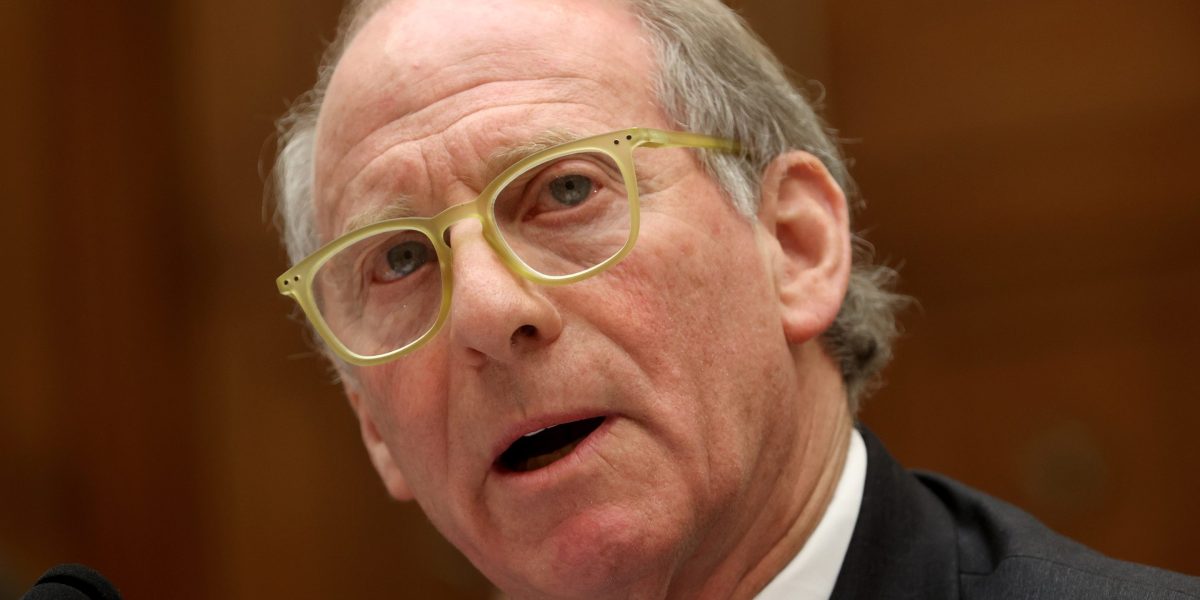
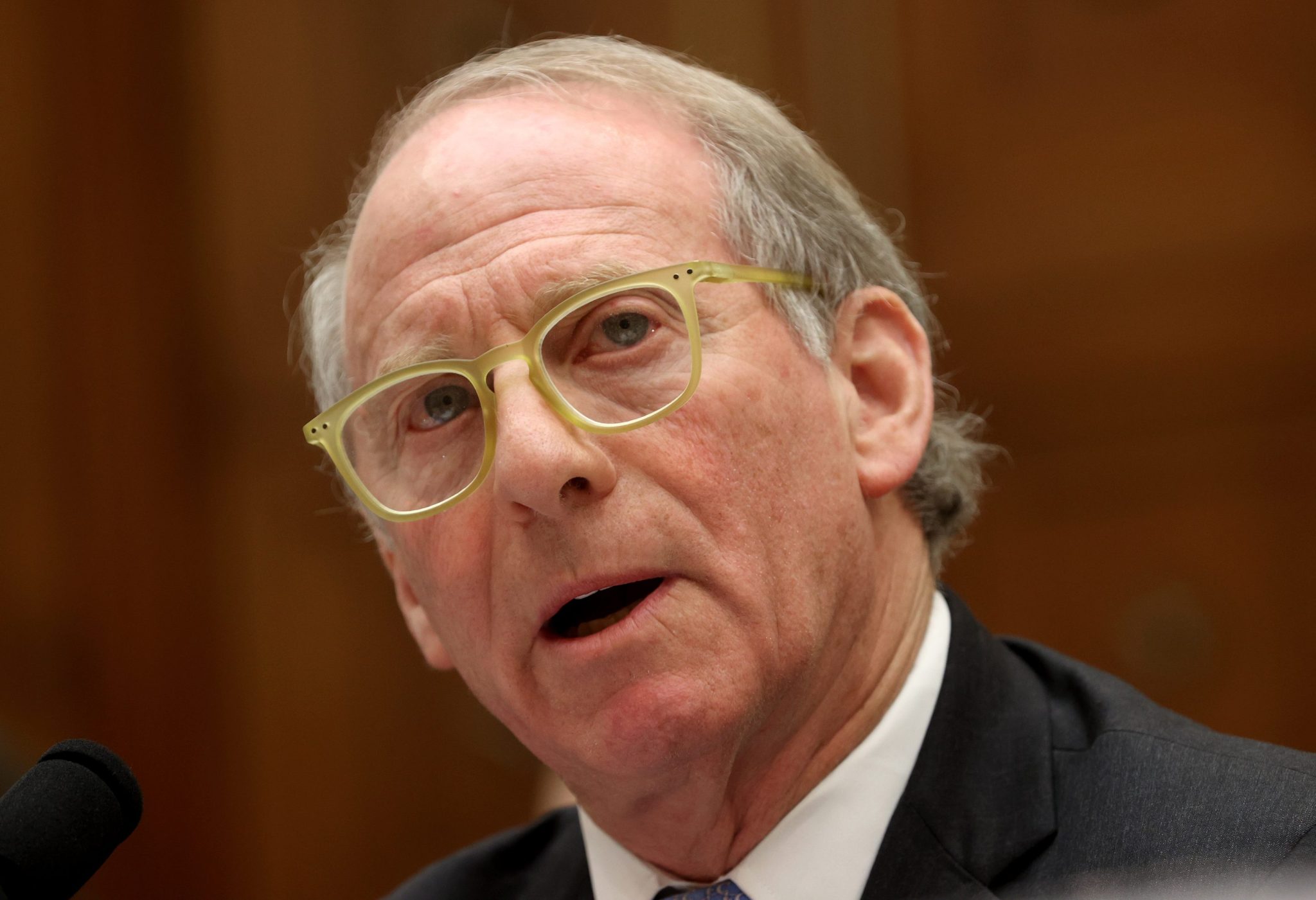
Richard Haass has spent four decades in Washington advising presidents, representing the U.S. abroad, and warning Congress about global threats. But these days, the veteran diplomat says the most dangerous crisis facing America isn’t coming from Russia, China, or the Middle East.
It’s coming from inside the country: the ugly, festering $38 trillion national debt he says is undermining U.S. strength.
“You feel a little bit like Paul Revere—except instead of the British coming, the crisis is coming,” Haass told Fortune in an exclusive interview. “It’s a slow-motion crisis. We’re already paying a significant price.”
Haass, the former president of the Council on Foreign Relations and a longtime national security official, is one of several experts contributing to a new series of debt-focused essays published by the Peterson Foundation. His argument is simple: America’s debt is no longer just an economic challenge. It is a national security problem, and one Washington is refusing to confront.
In the paper, Haass and coauthor Carolyn Kissane lay out numbers that are hard to look away from: The U.S. now carries $38 trillion in federal debt, equal to roughly 125% of GDP. Annual deficits hover near $2 trillion. And interest costs have exploded, hitting roughly $1 trillion last year, more than the country spent on its military.
“It’s already a national security crisis,” Haass told Fortune. “Servicing the debt crowds out more productive uses of national resources. You don’t need a bond market collapse to have a crisis.”
Those pressures, he argues, are constraining U.S. strategy. With Russia advancing, China modernizing, and conflicts simmering across the Middle East, Haass says defense spending may need to rise, not fall—and soon. Yet, the political appetite for military investments is shrinking as debt dominates the fiscal picture and populist tendencies make $2,000 revenue checks or rent control more popular.
“It becomes very hard to drum up support for what’s needed globally when people say, ‘We’re already deeply in debt. We can’t afford it,’” he said. “The debt is already limiting American options.”
A ‘slow-motion’ crisis that could still become a sudden one
Haass described two possible futures. The first is dramatic: he calls it the “cliff” scenario, a sudden loss of market confidence like the UK’s 2022 meltdown, when unfunded tax cuts triggered a massive bond-market selloff and led to the resignation of PM Liz Truss. In the U.S., he warns, that could be sparked by a failed Treasury auction, political chaos, or even geopolitical coercion, such as Beijing dumping U.S. debt to pressure Washington during a Taiwan crisis.
“I think China could weaponize its Treasuries,” he said. “They would pay a financial price. But if you’re Xi Jinping and your legacy is Taiwan, I think he’d pay that price.”

The second scenario—the one Haass believes we’re living in now—is quieter but still dangerous. Debt rises year after year, crowding out domestic investment, squeezing defense budgets, and thus weakening U.S. leverage abroad. Federal agencies responsible for cybersecurity, infrastructure, public health, and counterextremism face pressure to cut costs—as they did during DOGE, which experts estimate could cost taxpayers $135 billion this year in lost tax collections and productivity–while interest costs consume more of the budget.
“[W]e are guilty of spending our rainy-day fund in sunny weather,” Haass and Kissane wrote in the paper.
The political problem nobody wants to touch
Like other economists, Haas believes the obstacle isn’t some economic reform; it’s political.
“It will be extraordinarily difficult” to do what needs to be done to reduce the debt, he admits. Entitlement reform—in other words, making changes to Social Security or Medicare—is politically toxic. Tax increases are radioactive. And Washington remains locked in shutdown brinkmanship, just coming off the longest government shutdown in history, a testament to how polarized the nation is.
Still, he argues a feasible package exists: means-testing Social Security, gradually raising the retirement age, adjusting the COLA formula that informs those entitlement benefits, restoring IRS staffing, and lifting the corporate tax rate modestly. The aim isn’t to eliminate the debt, he says, but to bend the curve so debt grows more slowly than GDP.
“What’s required is not unrealistic,” he said. “You just need to change the trajectory.”
He believes a bipartisan commission may ultimately be the only workable path.
“Commissions exist to insulate the process from the politics,” he said. “It may take a coalition of the willing.”