Business
Corning CEO says Steve Jobs pressured him into making all the screens for the first iPhone: ‘Do you know what your biggest problem is? You’re afraid’


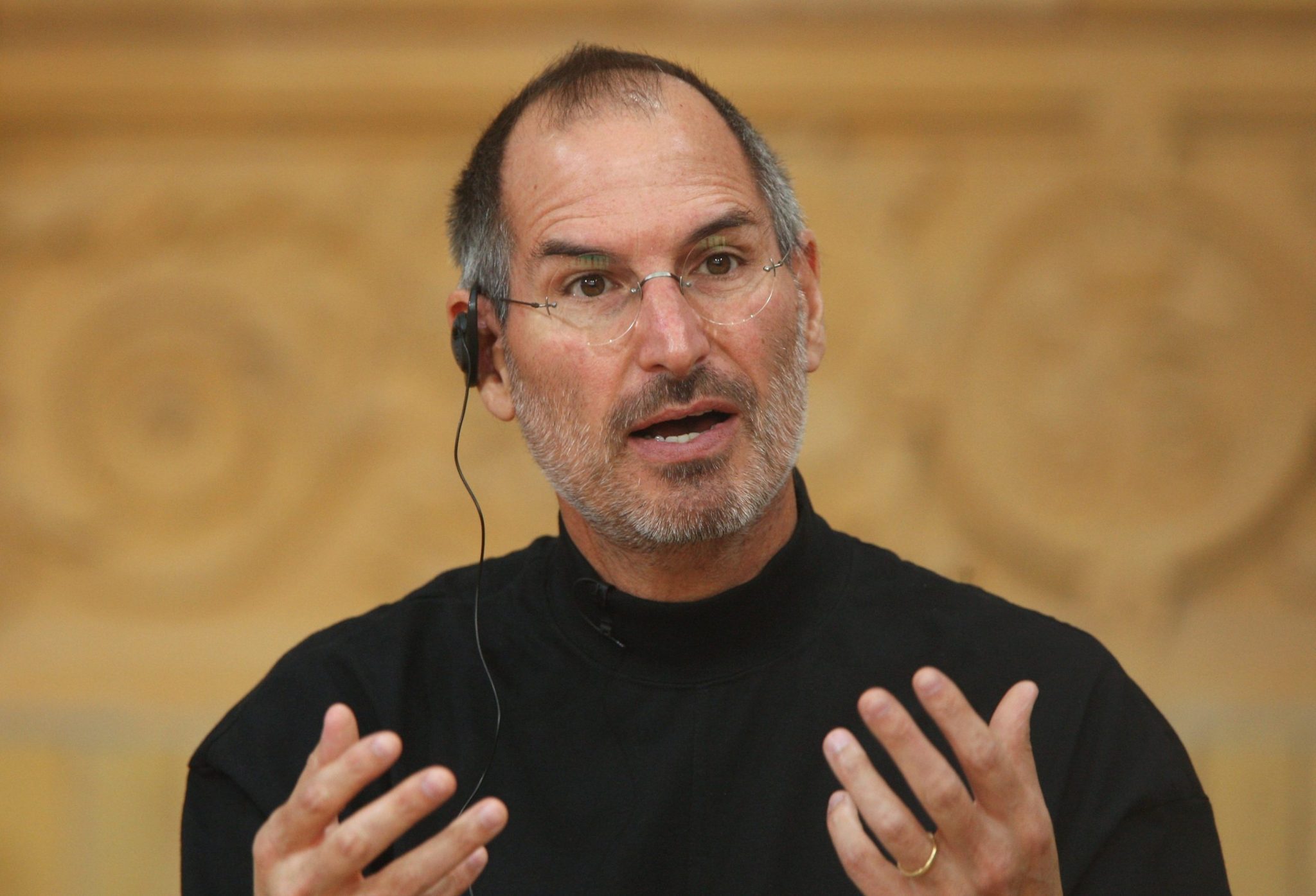
When Steve Jobs needed glass screens for the first iPhone in 2007, he didn’t just place an order with Corning. He challenged its CEO to confront his own fears about not being able to produce enough.
Wendell Weeks, who has led the 175-year-old glass and materials science company for two decades, recently recounted the pivotal conversation that helped define Apple’s most successful product. Speaking on Fortune‘s “Leadership Next” podcast with hosts Diane Brady and Kristin Stoller, Weeks revealed how Jobs manipulated him into taking on what seemed like an impossible task.
The story began after Weeks initially pitched Jobs on a different innovation: a synthetic green laser that could turn smartphones into projectors. Jobs dismissed the idea bluntly. “That’s the dumbest idea I’ve ever effing hurt in my life,” Weeks recalled Jobs saying. But Jobs saw potential in Corning’s technical capabilities and eventually contacted Weeks about creating a durable glass screen for the iPhone.
The challenge was enormous. Jobs wanted mass production of a scratch-resistant glass within six months for the iPhone’s June 2007 launch. Weeks told him Corning had invented a material that could work—Gorilla Glass—but lacked the manufacturing capacity to produce it at scale.
Weeks’ board of directors instructed him to suggest a second supplier to Jobs, concerned Corning couldn’t meet Apple’s needs alone. “Steve and I are sitting alone, and he says, ‘No, you’re going to do all of it,’” Weeks said. “And I’m going, ‘what I’m telling you is like, like, I really can’t.’”
That’s when Jobs delivered his challenge: “Do you know what your problem is?” Jobs asked. When Weeks admitted he didn’t know, Jobs continued: “You’re afraid. You know, you’re afraid I’m going to launch the biggest product in history, and I’m not going to be able to do it because you failed, and I’m going to eviscerate you.”
Jobs acknowledged this was a legitimate concern—”Now the truth is, I will, that’s true. If you fail, I will,” Weeks recounted—but then reframed the conversation entirely.
“But look what you’re doing,” Jobs told him. “You are putting your reputation [first]. You’re worried about you looking bad, and you’re keeping your people from greatness. Imagine how they’re going to feel—the folks that are working in that plant in Harrodsburg, Kentucky, all your investors … you’re putting yourself above them and your company.”
The statement hit its mark. “And I said to them, you’re right. I’m afraid. And I’ll go fix that,” Weeks told Fortune. “And we went away, and we said, ‘Yes.’”
Lucrative gamble
The gamble paid off spectacularly. Corning transformed its Harrodsburg, Kentucky, facility—originally built in the 1950s for Cold War-related products—to manufacture the first iPhone glass screens. The plant has remained central to Apple’s supply chain ever since. In August 2025, Apple announced a $2.5 billion commitment to produce all iPhone and Apple Watch cover glass at that facility, making it the first time 100% of Apple’s cover glass will be manufactured in the United States.

The investment will triple production capacity at Harrodsburg and increase the workforce by 50%, adding at least 200 hourly production jobs plus additional engineering positions. Apple and Corning will also establish an Apple-Corning Innovation Center at the plant to develop advanced materials for future products.
Apple CEO Tim Cook described the partnership as creating “the largest and most advanced production line ever created for smartphone glass,” adding that “any customer anywhere in the world who buys a new iPhone or Apple Watch will be holding precision glass made right here in Kentucky.”
For Weeks, the lesson from Jobs extended beyond that single deal. Reflecting on what makes great entrepreneurs different, he noted their relationship with risk. “Most of us view risk as all the ways that that you personally can look like an idiot,” Weeks said on the podcast. But Jobs “looks at things very straightforwardly and is damn fearless.”
The anecdote also illustrates a leadership philosophy Weeks has maintained throughout his tenure. “Fundamentally, every act of creation is an act of passion,” he said. “It’s not an act of cold logic framework.”
Path to leadership
Weeks joined Corning in 1983 after working briefly at PricewaterhouseCoopers, and became CEO in 2005. His path to leadership wasn’t without setbacks. In the late 1990s, he ran Corning’s optical fiber division and invested heavily in internet infrastructure during the tech boom. When the dotcom bubble burst in 2001, Corning’s stock plummeted from roughly $100 to $1 per share, and the company lost 99 percent of its value.
Weeks recalls asking company leadership not to fire him. “I said, ‘I’m chaining myself to the wheel here. I’ll be a janitor or whatever it is, but I’m staying until this gets fixed.’ They said, ‘Well, it’s not going to be a janitor. We’d like you to become president,’” he told Fortune.
That bet on optical fiber eventually proved prescient. The technology now accounts for 30% of Corning’s revenue and has surged with the rise of artificial intelligence and data centers. In October 2024, Corning announced a $1 billion multiyear deal with AT&T for next-generation fiber. The company’s market capitalization stands at approximately $71 billion.
Weeks, who serves on Amazon’s board of directors and holds 44 U.S. patents, described leadership as fundamentally about service rather than command. “I think leaders overexpress because we consume too much—business, junk food, literature and the like—that fundamentally leading is an act of service,” he said. “And whenever you flip that and you instead are the one that is being served, at that moment, you have lost the plot.”
Born in Scranton, Pennsylvania, to a plumber father and a secretary mother—both of whom he said were alcoholics—Weeks credited Corning’s culture with shaping his approach. “If you have it in your background, you realize that you come from a pretty chaotic background,” he said. “I was lucky that I was always smart enough to realize that if I wanted to be a better man, I needed to hang out with better people.”
You can watch Fortune‘s full conversation with Wendell Weeks below.