Business
S&P analysis of 9,000 companies worldwide finds the real cost of tariffs and other corporate costs: $1.2 trillion

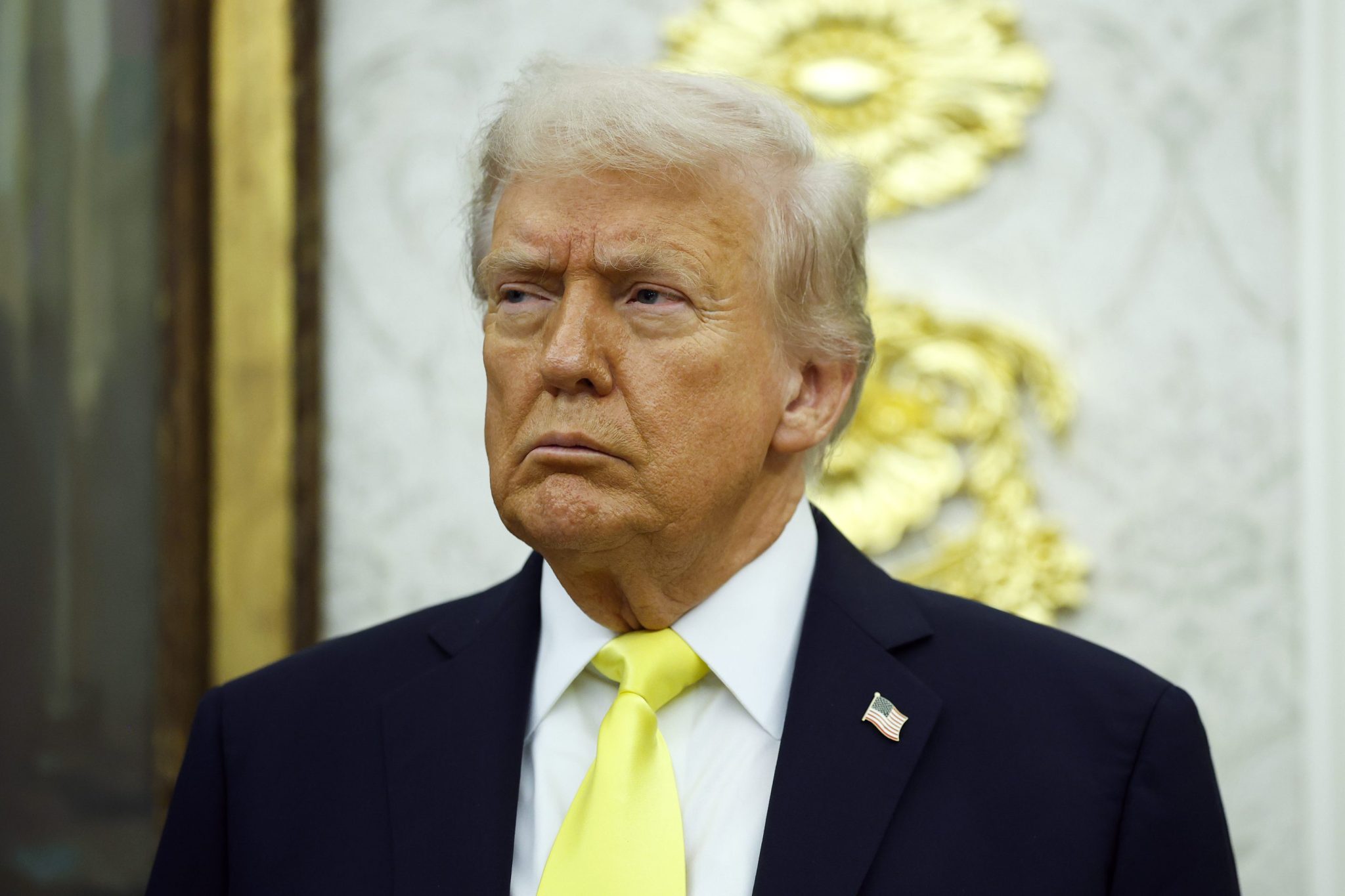
President Donald Trump’s tariffs are leading a trillion-dollar corporate squeeze, most of which is inevitably falling on consumers’ shoulders, an S&P Global report finds.
Companies will lose at least $1.2 trillion more this year than they expected before the year began and the picture on trade and tariffs dramatically changed, according to the report, published Thursday. It also reflects factors including wage increases and energy prices, and rising capital expenditure, particularly in AI infrastructure, S&P added.
S&P estimates $53 trillion in company expenses for this year, revising its January 1 forecast. The report’s analysis pulled from forecasts from more than 15,000 analysts following roughly 9,000 public companies, which represent $111 trillion of the $130 trillion global equity market, or some 85%.
“Global corporate margin expectations have contracted sharply” by about 0.64%, or $907 billion in lost profit among firms covered by sell-side analysts, the report said. This “wedge” is roughly made up of an increase of $600 billion in revenue forecasts and a $300 billion fall in earnings estimates.
Sell-side analysts cover the largest global retailers like Walmart, Amazon and Costco Wholesalers. Of the estimated $907 billion lost, roughly two-thirds, or $592 billion, is being passed to consumers via higher prices.
“One-third ($315 billion) is absorbed internally through lower earnings,” the report said.
But “real output” is declining, meaning fewer goods are actually being produced by these companies, suggesting consumers are actually paying more than two-thirds of this profit loss, according to the report.
Debate still rages over who’s shouldering the brunt of tariff-driven price hikes.
Trump-appointed Fed Governor Christopher Waller said in a speech on Thursday effects of tariffs on inflation have been modest and mostly felt by higher-income households, as “the highest-earning 10% account for 22% of personal consumption.” Spending data indicate little to no inflationary effect “down the income scale,” and any price pressures have not significantly eroded the purchasing power of less affluent households, Waller added.
But analysts from TS Lombard argue the economic fallout from tariffs is starkly divided by income, saying the wealthy are largely insulated and continue strong discretionary spending, while lower- and middle-income households bear most of the hardship. TS Lombard’s Dario Perkins described the situation as “the rich are having a party, and the poor are having a recession.”

Experts tell Fortune tariffs usually act as a “regressive tax,” meaning lower-income consumers are disproportionately affected by the price increases.
“For higher-income households, this impact is minimal,” Mohammad Elahee, professor of international business at Quinnipiac University, told Fortune. Luxury goods often maintain a price premium across global markets regardless of tariffs, he added. “These consumers possess the financial flexibility to absorb increased costs without significantly altering their purchasing behavior or lifestyle,”
Christopher Hodge, an economist at Natixis CIB Americas, a global financial institution, told Fortune tariffs take a larger percentage of income from lower earners since low- and middle- income households spend a greater share of their paycheck on goods—many of which are now tariffed—rather than services.
“Tariff-sensitive categories—like furniture, apparel, electronics, and household appliances—are heavily consumed by younger families and middle-income households outfitting homes and raising children,” he said.
The White House says American consumer strain will be transitory.
“The President and Administration’s position has always been clear: while Americans may face a transition period from tariffs upending a broken status quo that has put America Last, the cost of tariffs will ultimately be borne by foreign exporters, White House spokesperson Kush Desai told Fortune in a statement.
“Companies are already shifting and diversifying their supply chains in response to tariffs, including by onshoring production to the United States,” he added.
The S&P report said corporate profit loss may be higher than its “highly conservative” estimate.
“Because firms without analyst coverage tend to be smaller and less diversified, the $1.2 trillion should be viewed as a floor, not a ceiling,” the report said.