Business
JPMorgan strategist David Kelly warns America is ‘going broke slowly’ as federal debt spirals

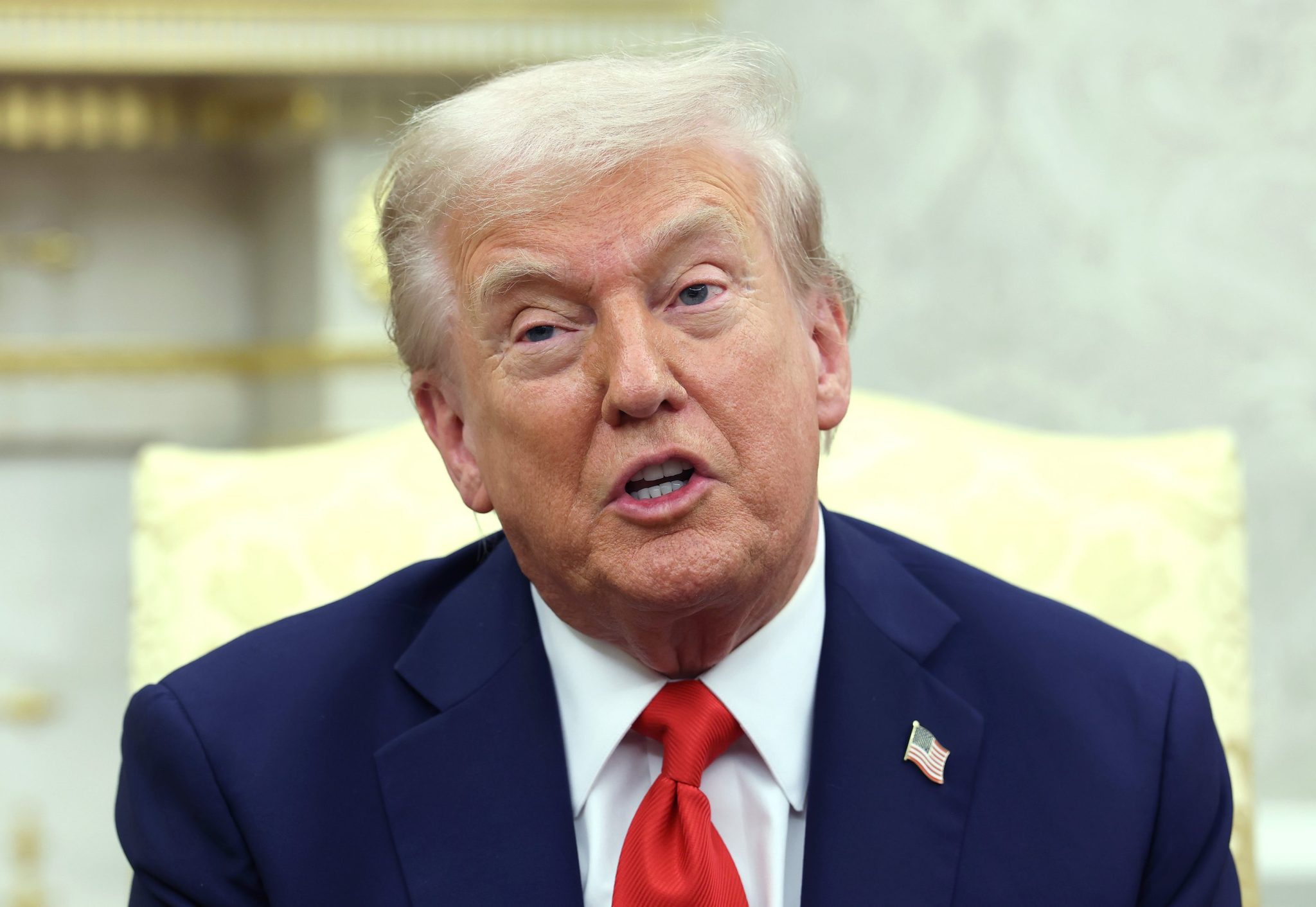
America is going broke, JPMorgan Asset Management’s chief global strategist David Kelly wrote in a note this week, but no one is panicking yet because the government is going broke slowly.
Kelly outlined the while the economy is facing a barrage of issues (geopolitics, trade wars, changing immigration enforcement, and government shutdowns to name a few) one of the key longer-term issues is how the U.S. government is going to pay its bills.
In a bid to wrangle down U.S. federal debt—and its contributions to the wider national debt—President Trump initially asked Tesla CEO Elon Musk to form the Department of Government Efficiency (DOGE) with the goal of axing $2 trillion from the federal budget.
But the pair then famously fell out over the White House’s One Big Beautiful Bill act, which the Congressional Budget Office (CBO) estimated will add another $3.4 trillion to the national debt over the next decade. The White House countered its tariff regime will offset the spending and any decrease in revenues due to tax cuts. The CBO estimates that tariffs should reduce total deficits by $4 trillion by 2035.
America’s national debt is spiraling higher by the second. At the time of writing it sits at over $37.8 trillion, and there are $1.2 trillion in interest payments to service the borrowing. JPMorgan CEO Jamie Dimon and Fed chairman Jerome Powell have both expressed concerns about it.
Kelly’s point is that while investors are mindful of the basic maths, the problem is going to unfold over a long period of time.
“The question I am asked most frequently by investors and financial advisors is when is the federal debt going to blow up in all of our faces. My usual answer is that, while we are going broke, we are going broke slowly. Global bond markets are very well aware of the trajectory of U.S. debt. The fact that even today, the U.S. government can borrow money for 30 years at a yield of just 4.6% speaks to a conviction that there remains room for the government to borrow more,” Kelly wrote in a note yesterday.
Optimism or naivety
The economist wrote that in the near term casual speculators may have some reason for optimism. For example, he pointed to tariff revenues raking in significant sums ($31 billion in August according to the White House) and recent estimates from the CBO and the Committee for a Responsible Federal Budget that deficits for FY2025 will total 6% of GDP, down from 6.3% last year.
This reduction of borrowing as a percentage of economic growth is a key factor watched by America’s lenders. A nation’s debt-to-GDP ratio is a clear barometer of whether a nation will be able to repay its debts or pay higher interest rates to sell its borrowing.
But Kelly cautioned: “It’s worth pausing here to consider this number. The total federal debt in the hands of the public is now almost $30.3 trillion or, we estimate, 99.9% of GDP. Starting from these levels, if nominal GDP grows by roughly 4.5% going forward, (comprised of 2.0% real growth and 2.5% inflation), then any budget deficit north of 4.5% will cause the debt-to-GDP ratio to rise. Under our assumptions, the debt-to-GDP ratio climbs from 99.9% on September 30th, 2025 to 102.2% of GDP 12 months later.”

Debt is likely to rise even quicker than this, he added.
On tariffs, for example, there are still questions about the legalities of Trump’s action. If they are overturned by the U.S. Supreme Court, “This would, at a minimum, force the administration to go back to the drawing board to impose replacement tariffs under some other authority or by sending a bill through Congress. Moreover, it could force substantial refunds of tariffs already paid in recent months,” Kelly added.
Moreover, these estimates are reliant on “no recession and no need for other major spending on domestic or international priorities.” Questions about whether the U.S. may already technically be in a recession in some states are growing. Kelly adds: “Because of all of this, a deficit equal to 6.7% of GDP should probably be regarded as a low-ball estimate of this year’s red ink.”
The takeaway for investors is diversifying their portfolios in case America’s debt begins to spiral more quickly than the current environment, Kelly said: “There is a danger that political choices lead to a faster deterioration in the federal finances, leading to a backup in long-term interest rates and a lower dollar. Based on current allocations and valuations alone, many investors should likely consider diversifying their portfolios by adding alternative assets and international stocks. The risk that we move from going broke slowly to going broke quickly adds an important reason to make this move today.”