Business
Government shutdown makes Trump’s $15 billion farmer bailout ‘very complicated,’ says Former USDA economist Joe Glauber

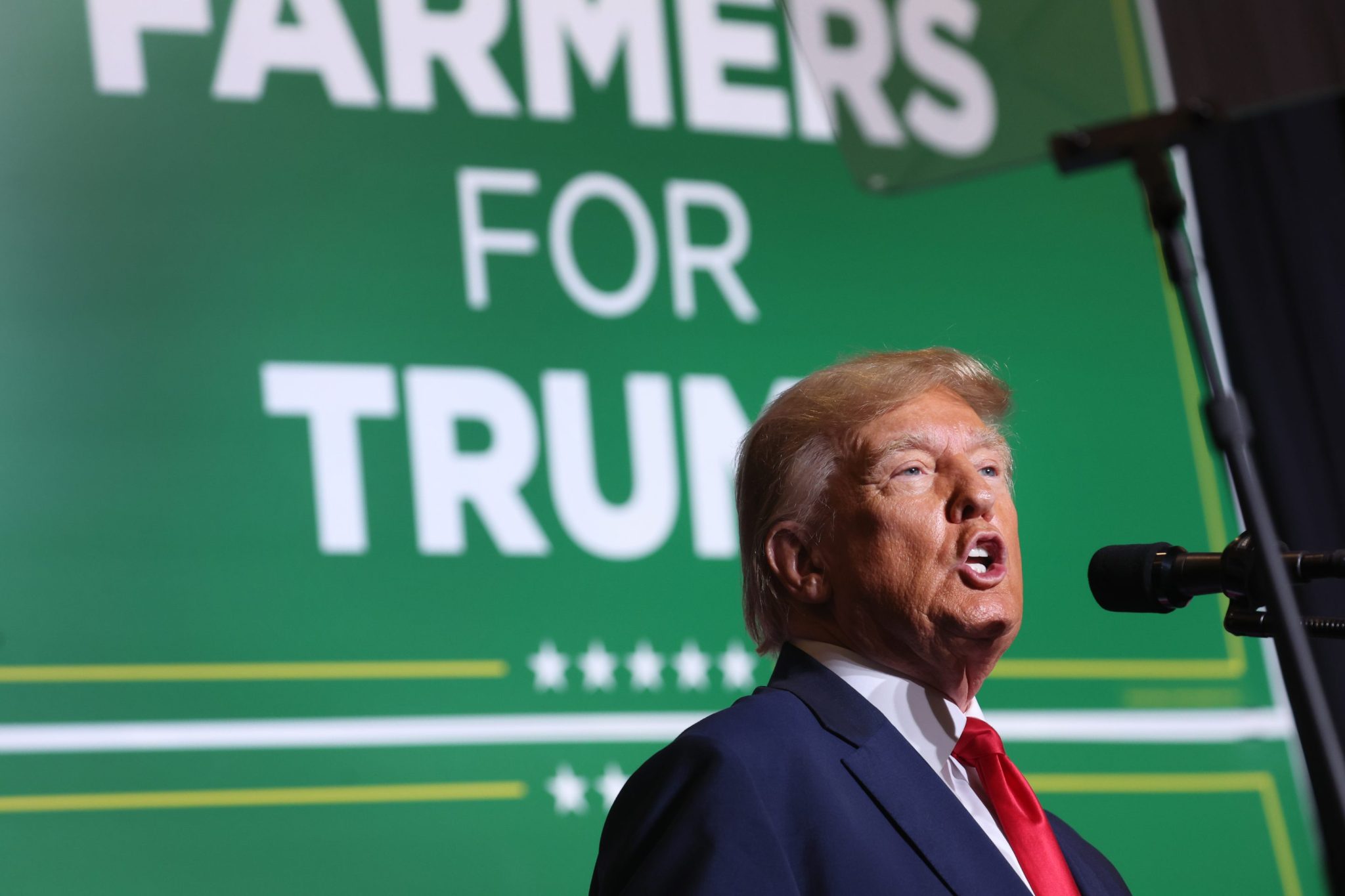
President Donald Trump’s plan to use tariff revenue to bail out farmers could be stalled by the ongoing government shutdown.
Trump said last month the administration would roll out subsidies for struggling farmers using revenue from his sweeping tariff policies. The White House will imminently announce a bailout plan that could put up to $15 billion in farmers’ pockets, Reuters reported, citing anonymous sources. Trump has said the aid would come from tariff revenues, but experts say that’s far easier said than done.
“How to fund this bailout is very complicated, and different than it was in 2018,” Joe Glauber, former chief economist at the U.S. Department of Agriculture during Trump’s first term, told Fortune. “You’d need Congress to reallocate tariff revenues. USDA can’t just say, ‘We’re going to take all that money and give it to farmers.’ That takes an act of Congress, and that’s tricky when the government isn’t even open.”
Trump’s move to lend a hand to farmers mirrors his first administration playbook, when the agricultural industry was similarly battered by tariffs pricing American farmers out of global markets. According to a 2022 USDA report, U.S. farmers lost $27 billion in agricultural exports between mid-2018 and 2019.
Glauber explained that during Trump’s first term, the administration tapped unused funds from the Commodity Credit Corporation—a Depression-era agency with a $30 billion spending cap—to pay farmers about $25 billion in 2018 and 2019. But that pool has already been stretched thin by recent income-support programs, and Congress hasn’t yet replenished it this fiscal year.
Even if the White House found the money, the logistics are daunting.
“You can’t just flip a switch,” Glauber said. “The Farm Service Agency offices that process payments are closed right now. You’d have to call back ‘essential employees,’ get new regulations written, and design a whole new program. That takes time and manpower, and you can’t do that without a functioning government.”
An ailing agricultural economy
The American agricultural industry is reeling from the impact of Trump’s tariffs, which have hiked up prices of equipment such as tractors and fertilizer, as well as led major imports such as China to snub U.S. farmers in favor of countries such as Argentina and Brazil with lower export taxes. China received about a quarter of the U.S.’s soybean exports in 2024, but it hasn’t placed any orders for the U.S. crop since May, according to U.S. Department of Agriculture data.
“The frustration is overwhelming,” the American Soybean Association (ASA) President Caleb Ragland said in a statement last month. “The farm economy is suffering while our competitors supplant the United States in the biggest soybean import market in the world.”
While Trump argues that his plan will protect “our great American farmers,” Glauber cautioned that payouts can’t repair the long-term damage of eroded trust in U.S. reliability.

“Checks in 2018 and 2019 covered short-term losses,” he said, “but the long-run consequence was that China stopped seeing the U.S. as a dependable supplier. Brazil’s market share in China jumped from about 45% to 70%. Those shifts don’t reverse overnight.”
Glauber noted that while previous bailouts softened the blow, they also created a form of “moral hazard.”
“It buys off the loudest group of protestors,” he said. “Farmers don’t want to survive on bailout checks—they want to sell their crops. But these payments let policymakers off the hook.”
Other economists agree another major bailout would do no favors for farmers looking to regain global market share from South American competitors.
“It will compensate for the immediate economic losses due to tariffs, but it doesn’t necessarily improve the long-term competitiveness of agriculture on the global stage,” Wendong Zhang, an associate professor of applied economics and policy at Cornell University’s SC Johnson School of Business, told Fortune.
Pressures on the farm economy are meanwhile mounting: Farm operations filing for bankruptcy have inched up since 2022 and have continued to rise this year, according to the Federal Reserve Bank of Minneapolis. In the second quarter of 2025, there were 93 filings, up from 88 the quarter before and about double that of 2024’s fourth quarter, though filings are still below the record in early 2020, when 169 farms filed for bankruptcy. Margins for row-crop producers have thinned amid falling prices and high fertilizer costs. Glauber worried that even if this new package goes through, it will be another temporary fix rather than a solution.
“You might compensate (for) losses this year,” he said, “but if trading partners see you as an unreliable supplier, they’ll go elsewhere. Prices can lure them back, but trust takes years.”